To make CBD gummies, you cook a gelatin or pectin candy base, stir in a measured amount of CBD after the cook, deposit the mass into molds and let the pieces set before packing. The CBD amount comes from simple math: 30 gummies at 25 mg each is 750 mg per jar, or about 0.76 g of 99% CBD isolate. For brands that would rather buy finished product, CBD gummies wholesale is the faster route; this guide is for manufacturers making their own. It covers gelatin versus pectin, which CBD input to use, potency per gummy, even mixing, setting, the total THC check from December 11, 2026 and shelf life. It is about production and label math, not about how much CBD anyone should take.
| Spec | At a glance |
|---|---|
| Gelling agent | Gelatin (chewy, animal-derived) or pectin (short bite, plant-based) |
| CBD input | Water soluble CBD (about 20%), CBD isolate (99%+) or non-detect broad spectrum distillate |
| When CBD goes in | After the cook, off the heat, before depositing |
| Deposit | About 82 to 88 C, 78 to 82 Brix |
| Setting time | Often 24 to 72 hours in a controlled room |
| THC check | 0.4 mg total THC or less per container from December 11, 2026 |
Gelatin vs Pectin for CBD Gummies
The gelling agent sets the texture, the process and who can buy the product. The figures below are typical industry ranges; a SupplySide technical overview covers both systems in more detail.
| Factor | Gelatin | Pectin (high methoxyl) |
|---|---|---|
| Source | Animal (pork or beef) | Plant (citrus or apple) |
| Texture | Chewy, elastic | Short, clean bite |
| Use level | About 6 to 9% of the recipe | About 1 to 3% of the recipe |
| Key spec | Bloom strength, often 250 to 275 for gummies | Set depends on pH, about 3.2 to 3.6 |
| Deposit | About 82 C at 78 to 80 Brix | About 82 to 88 C at 80 to 82 Brix |
| Heat in transit | Softens and can melt in warm trucks | Holds shape better in heat |
| Labels | Not vegan; kosher or halal only when certified | Vegan and vegetarian |
Gelatin is forgiving and gives the classic gummy bear chew. Pectin needs tighter control of pH and solids, but it opens vegan and plant-based labels and travels better through warm months. Many CBD brands now run pectin for those two reasons.
Which CBD Input Works Best in Gummies?
A gummy mass is mostly sugar and water, and CBD is an oil-loving molecule. That one fact decides the input:
| Input | CBD content | How it mixes | Taste and color | THC fit for December 11, 2026 |
|---|---|---|---|---|
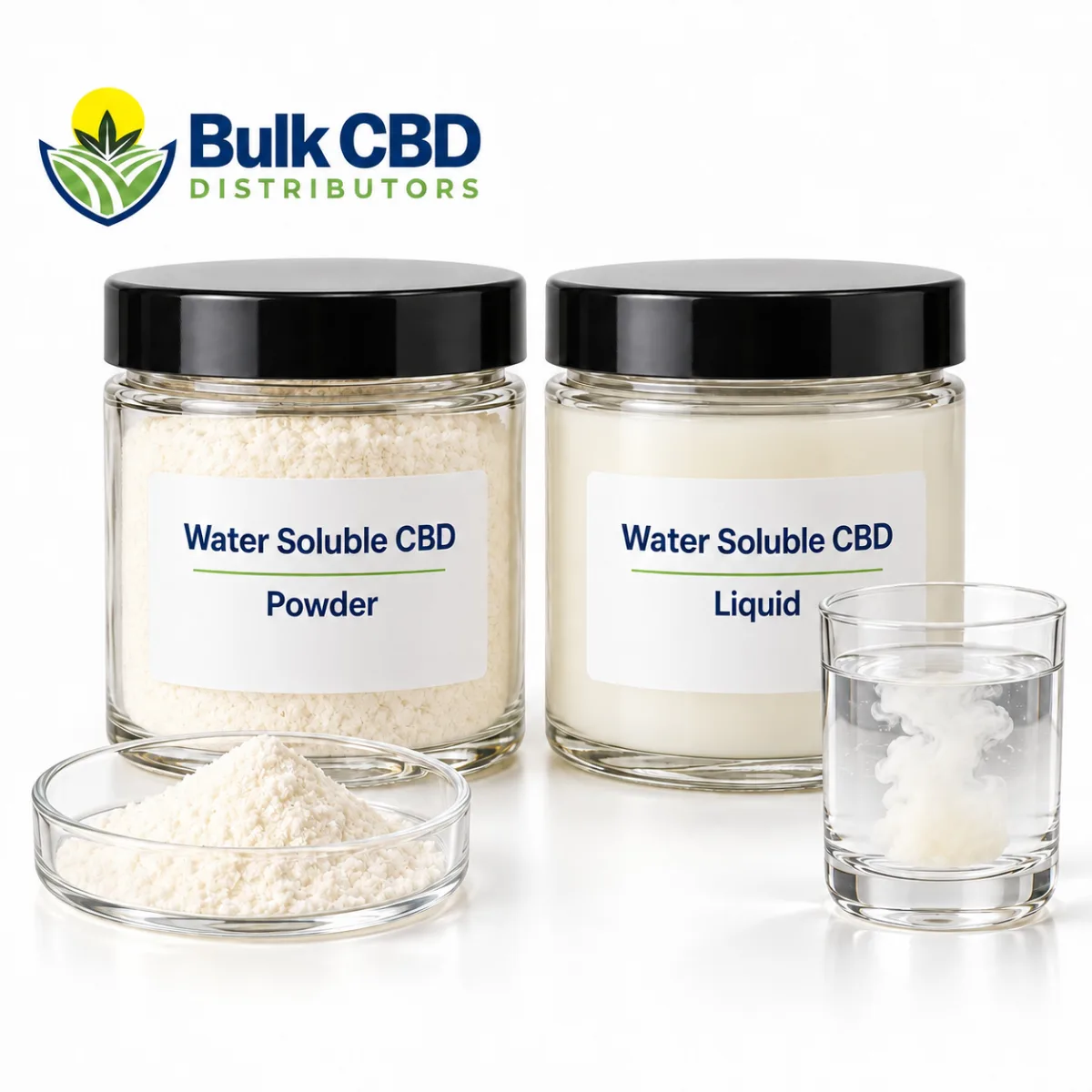
| Water soluble CBD | About 20% (10% liquid also available) | Disperses straight into the water phase | Mild, clear | Check the batch COA for THC status |
| CBD isolate | 99%+ | Needs pre-dispersing in a little oil with an emulsifier such as lecithin | Neutral, white | Non-detect THC |
| Broad spectrum distillate | 80 to 95% | Pre-disperse in oil with an emulsifier | Earthy, amber | Non-detect grades fit |
| Full spectrum distillate | 75 to 85%+ | Pre-disperse in oil with an emulsifier | Strong hemp taste | Will not fit at typical gummy strengths |
Water soluble CBD is the simplest choice for even mixing, because it disperses instead of floating. Isolate usually costs less per milligram of CBD than water soluble CBD, but it needs a small oil and emulsifier premix. Our water soluble CBD guide explains how the emulsion works, and our guide to the best ingredients for CBD edibles and beverages compares inputs for drinks, chocolate and other formats.
How to Make CBD Gummies, Step by Step
- Set the strength and batch. Choose CBD per gummy, gummies per jar and piece weight, then scale to the batch. Example: 25 mg per gummy, 30 per jar, 1,000 jars.
- Calculate the CBD input from the COA. Divide the total CBD needed by input potency as a decimal (0.99 for 99%) x 1,000, then add a small overage, often 2 to 5%, for material left in kettles, lines and molds.
- Prepare the gelling agent. Hydrate gelatin in about twice its weight of water at around 60 C, then heat to about 80 C until fully melted, and use it within about two hours. For pectin, blend it with about five times its weight in sugar, then disperse it into hot water under high shear and bring it to a boil.
- Cook the syrup to target solids. Cook sugar and glucose syrup to the solids your recipe calls for, typically about 78 to 82 Brix in the final mass. For pectin, the hydrated pectin goes in before the cook; for gelatin, add the melted gelatin after the syrup cools from the cook, without boiling it.
- Add CBD, flavor and color after the cook. Stir in the pre-dispersed CBD with flavor and color once the mass is off the heat. For pectin, add the acid last, just before depositing, so the gel does not set early.
- Mix until uniform. Mix long enough for the CBD to spread evenly through the whole mass. Uneven mixing is a common reason gummies test outside their label claim.
- Deposit into molds. Deposit at about 82 to 88 C into starch or silicone molds. Pectin needs the mass at about pH 3.2 to 3.6 to set.
- Set, demold and finish. Let the pieces set in a controlled room, often 24 to 72 hours, then demold and coat with oil, wax or sanding sugar so they do not stick.
- Test, pack and label. Send gummies from the start, middle and end of the run to an ISO 17025-accredited third-party lab for CBD per piece and total THC, then pack in moisture-barrier packaging.
Making your first gummy run?
Tell us the gummy count, strength and base you are using and we will help you size the CBD input. MOQs run 100g to 1kg depending on the product. Request a wholesale quote or use the ingredient amount calculator.
Potency per Gummy: The Math
Every gummy calculation runs on three formulas:
CBD per jar (mg) = mg per gummy x gummies per jar
CBD per batch (mg) = CBD per jar x jars
grams of input = CBD per batch (mg) / (input potency as a decimal x 1,000)
Here is what that looks like for a run of 1,000 jars of 30 gummies, before overage:
| CBD per gummy | CBD per jar | 99% isolate needed | 20% water soluble CBD needed |
|---|---|---|---|
| 10 mg | 300 mg | About 303 g | 1,500 g |
| 25 mg | 750 mg | About 758 g | 3,750 g |
| 50 mg | 1,500 mg | About 1,515 g | 7,500 g |
Piece weight matters too. A 4 g gummy at 25 mg carries CBD at about 6.25 mg per gram of candy, and the depositor has to hit that piece weight consistently for the label to hold. Our CBD strength guide covers overage and how finished test results compare with the label.
Keeping CBD Evenly Spread
Many failed gummy lots are not short on CBD overall; the CBD just is not where it should be. Oil-based CBD can rise to the top of the kettle, and a mass that cools while it waits for the depositor thickens unevenly. These habits keep pieces consistent:
- Pre-disperse oil-based CBD in a small amount of oil with an emulsifier before it meets the candy mass.
- Mix for a fixed, recorded time after the CBD goes in, and keep the mass moving in the hopper.
- Hold deposit temperature steady so viscosity and piece weight stay constant through the run.
- Test pieces from the start, middle and end of every run, not one composite.
The THC Check for Gummies Sold From December 11, 2026
From December 11, 2026, Section 781 of P.L. 119-37 limits finished hemp products to 0.4 mg of total THC per container, and a gummy jar is one container. The math:
mg of THC per jar = grams of input per jar x total THC % x 10
A 750 mg jar made from an 80% distillate needs about 0.94 g of it. If that distillate carries 0.3% total THC, the jar holds about 2.8 mg of THC, roughly seven times the cap. The same jar made from non-detect CBD isolate or non-detect broad spectrum distillate should come in under the cap. Because gummies are acidic, confirm total THC on the finished lot as well as the input; the total THC guide shows how to read it.
Shelf Life and Packaging
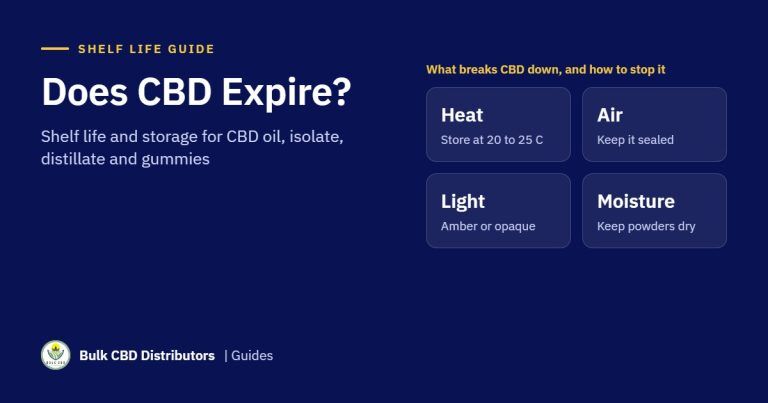
Gummies are often dated about 12 months. Texture usually fails before potency does: gummies that gain moisture turn sticky and sweat, and gummies that lose it turn hard. Moisture-barrier pouches or sealed jars, a good coating and cool storage do most of the work. Our guide to CBD shelf life covers how brands set expiration dates from stability testing.
Labels for CBD Gummies
A gummy label should state CBD per gummy, gummies per container and CBD per container, the ingredient list including the gelatin source or pectin, allergens, a lot number and a best-by date. Keep claims to what is in the jar, not what it does. State rules for hemp edibles vary, including age limits and serving caps in some states, so check each market before you ship. Brands launching a line from scratch can start with our guide to starting a CBD product line under Section 781.
Make, White Label or Buy Retail Ready
Making gummies in-house gives full control of recipe and cost, but it takes a kitchen or co-packer, depositing equipment and testing. Two other routes exist: our white label CBD program puts your brand on finished gummies, and our Retail Ready section stocks finished CBD gummies by the case.
How BCD Supports Gummy Makers
We supply the CBD inputs gummy makers use most: water soluble CBD, CBD isolate and broad spectrum distillates, each shipped with the batch COA for your lot. Our sourcing runs through long-standing relationships with hemp manufacturers and distributors, which lets us match a lot to your THC and potency needs. Testing is done by ISO 17025-accredited third-party labs.
You send an order request, we confirm stock and the total, and you pay only once it is confirmed. Most orders go out the same or next day after payment, a few take up to three business days, and every box ships without branding.
What This Means for Your Business
- Pick the base first: pectin for vegan labels and warm shipping, gelatin for the classic chew.
- Match the input to the base: water soluble CBD mixes easiest; isolate needs a premix.
- Calculate from the batch COA and add a small, recorded overage.
- Run the THC per jar math now for every gummy SKU that will sell after December 11, 2026.
Frequently Asked Questions
How do you make CBD gummies?
Cook a gelatin or pectin candy base, stir in a measured amount of CBD after the cook, deposit into molds at about 82 to 88 C, let the pieces set for 24 to 72 hours, then coat, test and pack.
Is gelatin or pectin better for CBD gummies?
Gelatin gives a chewy texture and is easy to run. Pectin gives a short bite, suits vegan labels and holds its shape better in heat, but needs tighter pH and solids control.
What type of CBD is best for gummies?
Water soluble CBD mixes most evenly into a candy mass. CBD isolate usually costs less per milligram of CBD but needs a small oil and emulsifier premix. Non-detect broad spectrum distillate works if you want a hemp profile.
How much CBD isolate do I need for 30 gummies at 25 mg each?
30 x 25 mg is 750 mg, which is about 0.76 g of 99% CBD isolate, before overage.
Can you make gummies with CBD oil?
Yes, but oil-based CBD separates in a water-based candy unless it is pre-dispersed with an emulsifier such as lecithin. Water soluble CBD avoids that step.
When should CBD be added to the gummy mix?
After the cook and off the heat, together with flavor and color. For pectin, add the acid last, right before depositing.
Why do CBD gummies sweat or stick?
Usually moisture: the pieces were not set long enough, the coating is thin or the packaging lets humidity in.
How long do CBD gummies last?
They are often dated about 12 months. Texture changes from moisture gain or loss usually appear before a large drop in CBD.
How do you keep CBD even across every gummy?
Pre-disperse the CBD, mix for a fixed time, hold deposit temperature steady and test gummies from the start, middle and end of each run.
Do CBD gummies need THC testing?
Yes. From December 11, 2026, each container must hold 0.4 mg of total THC or less, so test the finished lot, not only the input.