Section 781 of P.L. 119-37 rewrites the federal definition of hemp, and most of it now takes effect on December 11, 2026. The original date was November 12, 2026; P.L. 119-103 (H.R. 6500), signed September 3, 2026, moved it back, except for synthetic cannabinoids that cannot be naturally produced by the cannabis plant, which are still excluded starting November 12, 2026. For B2B buyers of bulk CBD, CBG, CBN, CBC, and CBDV (the non-intoxicating cannabinoids), the practical news is favorable: CBD, CBG, CBC and CBDV stay within the federal hemp definition under the same total THC and per-container rules as every hemp ingredient, and CBN is less settled. The biggest changes hit intoxicating hemp-derived products. This guide explains what changes, what stays legal, and the distinction between bulk B2B ingredients and finished consumer products that every hemp operator needs to understand before the deadline.
Update log (last reviewed October 10, 2026)
- October 10, 2026: Reviewed against current law. Dates unchanged: synthetic cannabinoid exclusion November 12, 2026; the rest of Section 781 December 11, 2026. We have not found a published FDA similar-effects list.
- September 3, 2026: P.L. 119-103 (H.R. 6500) signed, moving most of Section 781 from November 12 to December 11, 2026.
- November 12, 2025: P.L. 119-37 enacted, including Section 781.
What Is Section 781 of P.L. 119-37?
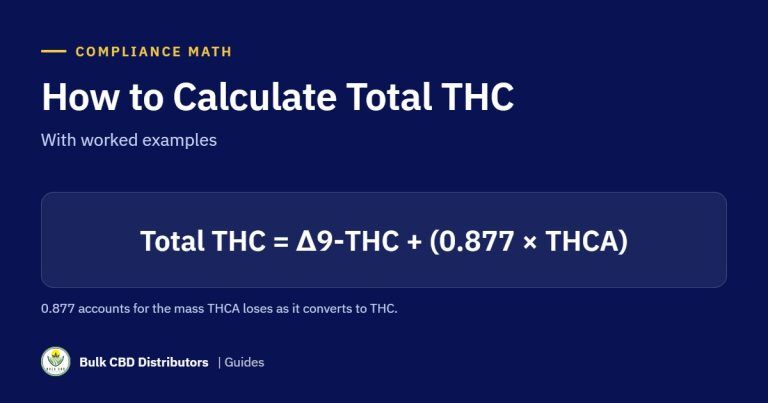
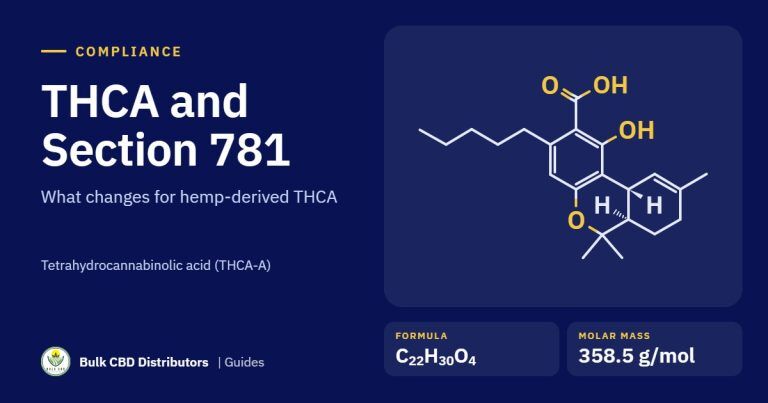
P.L. 119-37, enacted November 12, 2025, contains Section 781, which amends the federal definition of hemp to exclude cannabinoids that produce intoxicating effects. It targets the synthetic, converted, and high-potency intoxicating cannabinoid products that spread after the 2018 Farm Bill. From December 11, 2026, hemp is measured by total THC, including THCA, at or below 0.3% on a dry weight basis, rather than Delta-9 THC alone. Non-intoxicating cannabinoids (CBD, CBG, CBC, CBDV) are affected the same way as every hemp ingredient, because the total THC rule and the per-container cap apply to them too, but they remain within the federal hemp definition. CBN is less settled.
When Does Section 781 Take Effect? Key Dates
Most of Section 781 takes effect on December 11, 2026. The deadline has already moved once and could move again if Congress acts before then.
| Date | What happens |
|---|---|
| November 12, 2025 | P.L. 119-37 enacted, including Section 781 |
| February 10, 2026 | FDA deadline to publish its list of cannabinoids with effects similar to THC (missed; not yet published) |
| September 3, 2026 | P.L. 119-103 (H.R. 6500) signed, delaying most Section 781 changes |
| November 12, 2026 | Synthetic cannabinoids that cannot be naturally produced by the cannabis plant are excluded from hemp |
| December 11, 2026 | The rest of the new hemp definition takes effect, including total THC and the 0.4 mg per container cap |
Sources: Congressional Research Service, Changes to the Statutory Definition of Hemp (IF13136); National Agricultural Law Center, Policy and Legislative Update on Hemp; USDA Agricultural Marketing Service, Hemp.
What changes on December 11, 2026?
- Hemp is measured by total THC, including THCA, at or below 0.3% on a dry weight basis.
- Finished hemp-derived consumer products are capped at 0.4 mg of total THC and similar cannabinoids per container.
- Delta-8, Delta-10, HHC, THCP, THC-O and other converted intoxicating cannabinoids fall outside the hemp definition.
- CBD, CBG, CBC and CBDV stay within the hemp definition; CBN is less settled until FDA publishes its similar-effects list.
What Changes When Section 781 Takes Effect?
- Delta-8 THC: removed from the federal hemp definition
- Synthetic cannabinoids that cannot be naturally produced by the plant: excluded from November 12, 2026
- Delta-10 THC and other converted THC analogs: excluded
- THCA flower and concentrates: total THC now counts THCA, which puts most THCA products above the 0.3% limit
- HHC, THCP, THC-O, and similar compounds: excluded
- High-THC finished consumer products: products containing more than 0.4 milligrams of total THC per container exit the hemp definition
What Stays Legal Under Section 781?
- CBD (cannabidiol): all bulk formats: isolate, distillate, broad-spectrum, full-spectrum, crude oil, water-soluble
- CBG (cannabigerol): isolate, distillate, flower, and biomass
- CBN (cannabinol): may remain legal, though its status is less settled than CBD's because most commercial CBN is converted from other cannabinoids. FDA has not yet published its similar-effects list (its February 2026 deadline passed), so CBN's status will be confirmed once that list appears.
- CBC (cannabichromene): isolate and distillate. Non-intoxicating; same total THC and per-container rules as CBD.
- CBDV (cannabidivarin): isolate and distillate. Non-intoxicating.
- CBDA and CBGA: the acidic precursor forms. Non-intoxicating; same total THC and per-container rules as CBD.
- Hemp terpenes: entirely unaffected. Terpenes are not cannabinoids.
- Hemp biomass: Farm Bill-compliant biomass at or below 0.3% total THC remains legal.
The Critical B2B Bulk Ingredient Distinction
For B2B buyers purchasing bulk hemp cannabinoid ingredients, the most important point in Section 781 is this: the law distinguishes between bulk raw ingredients and finished consumer products. Bulk ingredients and other intermediate hemp products stay under a 0.3% limit, now measured as total THC (including THCA) combined with any cannabinoids FDA lists as having similar effects. For B2B buyers sourcing bulk CBD, CBG, or other non-intoxicating cannabinoid ingredients with compliant COAs, the practical standard is familiar: keep total THC, including THCA, at or below 0.3% and make sure the COA shows every THC input.
What the 0.4mg Container Cap Means for Finished Products
Section 781 introduces a per-container total THC cap of 0.4 milligrams for finished hemp-derived consumer products. This applies to the total THC content (plus any listed similar-effect cannabinoids) in the complete finished product, not to the bulk ingredient. Manufacturers formulating with Compliant full-spectrum CBD distillate should calculate total THC per container for each finished SKU and decide whether reformulation is needed before December 11, 2026. For manufacturers formulating with Non-Detect THC broad-spectrum CBD distillate or CBD isolate, the 0.4 mg cap is rarely a constraint, but check the LOQ-based upper bound for large containers.
From the Field
"I have worked in hemp since the first year of Farm Bill legalization, and Section 781 is one of the biggest regulatory changes I have seen. The date has already moved once and may move again, but the direction looks clear. If your product line depends on intoxicating hemp products, it is worth planning now rather than waiting. For most of our customers the practical steps are simple: confirm your COAs, check total THC in your finished products, and build around the cannabinoids that stay legal, like CBD, CBG and CBC. We are making the same adjustments ourselves."
John Piccone, Founder, Bulk CBD Distributors
What Stays Available Under Section 781
Non-intoxicating hemp ingredients remain available after Section 781 takes effect. Section 781 still applies to them the same way it applies to every hemp ingredient: total THC (including THCA) counts toward the hemp definition, and finished products carry the 0.4 mg per container cap. These are the main non-intoxicating ingredient formats, with links to each one's current specs and COA:
- CBD: CBD isolate, full spectrum CBD distillate (Compliant version), broad spectrum CBD distillate, CBD crude oil, water soluble CBD
- CBG: CBG isolate, CBG distillate, CBG flower (being restocked), CBG biomass
- CBN: CBN isolate, CBN distillate, crystal resistant CBN distillate
- CBC: CBC isolate, CBC distillate
- CBDV: CBDV isolate, CBDV distillate
- Acidic cannabinoids: CBDA isolate, CBGA isolate
- Hemp terpenes and biomass: available; biomass is tested on total THC, including THCA
Products that Section 781 affects, such as THCA flower and concentrates and Delta-8 items, are a different case: buyers of those products should plan for changes before the new definition takes effect. The non-intoxicating ingredients listed above stay available under the same total THC and per-container rules as CBD.
What B2B Buyers Should Do Before December 11, 2026
- Audit your current ingredient inventory for any bulk ingredients containing Delta-8 THC, THCA, or other Section 781-affected cannabinoids.
- Calculate total THC in finished products for any full-spectrum CBD distillate formulations. Products exceeding 0.4 mg THC per container need reformulation.
- Review supplier documentation to ensure current-lot COAs confirm Farm Bill compliance with the correct total THC formula.
- Identify replacement ingredients for any affected SKUs. CBD, CBG, CBC and CBDV are the compliant substitutes; CBN is less settled.
- Place year-end ingredient orders early. The effective date lands during holiday carrier delays and plant shutdowns; see our holiday ordering guide for hemp ingredients for timing.
- Update labels and marketing materials referencing the legal status of affected cannabinoids before December 11, 2026 (November 12, 2026 for synthetic cannabinoids).
- Watch for further changes from Congress before December 11 and for FDA's similar-effects list, either of which could change what is in scope. Separately, USDA has delayed enforcement of its rule that hemp compliance testing come from a DEA-registered third-party laboratory until December 31, 2026.
What This Means for Your Business
Section 781 is the clearest regulatory signal the hemp industry has received: the future of federally legal hemp cannabinoids is non-intoxicating. Businesses positioned on CBD, CBG, CBC and CBDV keep their core ingredients, provided total THC and per-container limits are met, and CBN should be watched until FDA publishes its list. Businesses still carrying intoxicating hemp products face a hard transition deadline.
Compare current non-intoxicating ingredient specs and COAs
Each product page linked in the list above shows current sizes and a representative COA, and every order includes hemp compliance documentation. If you are planning a Section 781 transition and want a second opinion on an ingredient, send us the spec and volume.
Frequently Asked Questions
What is Section 781 of P.L. 119-37?
Section 781 of P.L. 119-37 amends the definition of hemp to exclude intoxicating hemp-derived cannabinoids and to measure total THC, including THCA. It removes Delta-8 THC, Delta-10 THC, THCA, HHC, and similar compounds from the federal hemp definition while keeping non-intoxicating cannabinoids such as CBD, CBG, CBC and CBDV within the definition. CBN is less settled.
When does Section 781 take effect?
Most of Section 781 takes effect on December 11, 2026. P.L. 119-103 (H.R. 6500), signed September 3, 2026, moved it from the original November 12, 2026 date. Synthetic cannabinoids that cannot be naturally produced by the cannabis plant are still excluded starting November 12, 2026. Congress could change the date again before December 11.
Is CBD legal after Section 781 takes effect?
Yes. CBD remains federally legal under Section 781 as a non-intoxicating cannabinoid within the updated hemp definition, provided it derives from Farm Bill-compliant hemp with total THC at or below 0.3%.
Is CBN legal after Section 781 takes effect?
CBN may remain federally legal under Section 781, though its status is less settled than CBD's because most commercial CBN is converted from other cannabinoids. The FDA has not yet published its similar-effects list, which was due in February 2026. Watch for that list before committing to long production runs.
What happens on November 12, 2026?
Synthetic cannabinoids that cannot be naturally produced by the cannabis plant are excluded from the hemp definition on November 12, 2026. The rest of Section 781, including the total THC rule and the 0.4 mg per container cap, waits until December 11, 2026.
What is the 0.4mg total THC container cap?
Section 781 limits finished hemp-derived consumer products to 0.4 milligrams of total THC per container. This cap applies to the total product, not to bulk raw ingredients. Manufacturers using full-spectrum CBD distillate should calculate total THC per container for each finished SKU.
Does the 0.4mg cap apply to bulk CBD ingredients?
No. The cap applies to finished consumer products, not to raw bulk hemp ingredients. Bulk ingredients stay under the 0.3% limit, now measured as total THC, including THCA.
What cannabinoids are removed under Section 781?
Delta-8 THC, Delta-10 THC, THCA (in intoxicating applications), HHC, THCP, THC-O, and other synthesized or converted intoxicating hemp-derived cannabinoids. Non-intoxicating cannabinoids including CBD, CBG, CBC and CBDV are not excluded, though the same total THC and per-container rules apply to them; CBN's status is less settled.
Do I need to reformulate my full-spectrum CBD products?
Possibly, depending on total THC per container. Calculate total THC per container (total THC percent x 10 x grams of distillate in the product, for mg) for each full-spectrum SKU. Products above 0.4 mg THC per container need reformulation to broad-spectrum distillate or CBD isolate before December 11, 2026.
Where should B2B cannabinoid buyers focus after Section 781 takes effect?
On non-intoxicating cannabinoids with a stable regulatory foundation: CBD, CBG, CBC and CBDV in bulk formats, with CBN on a watch list until FDA publishes its similar-effects list. Whatever you choose, check total THC on every COA and per container in every finished SKU.
Related Reading
- How to Source Wholesale CBD: The B2B Buyer's Complete 2026 Guide
- Full Spectrum vs. Broad Spectrum vs. CBD Isolate: The Definitive B2B Comparison
- How to Read a Hemp COA: A Step-by-Step Guide for B2B Buyers
- What Is CBG? The Complete Wholesale Guide for B2B Buyers
- What Is CBDV? The Emerging Cannabinoid Every Forward-Thinking Brand Should Know
- Browse BCD's wholesale catalog