CBG (cannabigerol) is a non-intoxicating cannabinoid produced naturally in the hemp plant, and the neutral form of CBGA, the acid precursor from which CBDA, THCA, and CBCA develop as the plant matures. For B2B buyers, CBG represents one of the most significant category opportunities in the post-Section 781 hemp market: a cannabinoid with genuine formulation utility, a growing commercial supply chain, and a price premium that reflects real production constraints rather than marketing inflation. This guide explains how CBG forms in the plant, the forms it is sold in, why it costs more than CBD, and what to check before sourcing it. Current forms, specs and representative COAs are listed on the wholesale CBG page.
| Spec | Typical CBG ingredients |
|---|---|
| Potency | 99%+ CBG in isolate; 80 to 95% CBG in broad spectrum distillate |
| Form | Isolate powder, distillate oil and water soluble formats |
| Delta-9 THC | Non-detect in isolate; 0.3% or less in broad spectrum distillate, frequently non-detect |
| Minimums | Usually 100g to 1kg depending on the product; ask for the batch COA with every order |
What CBG Is and How It Forms
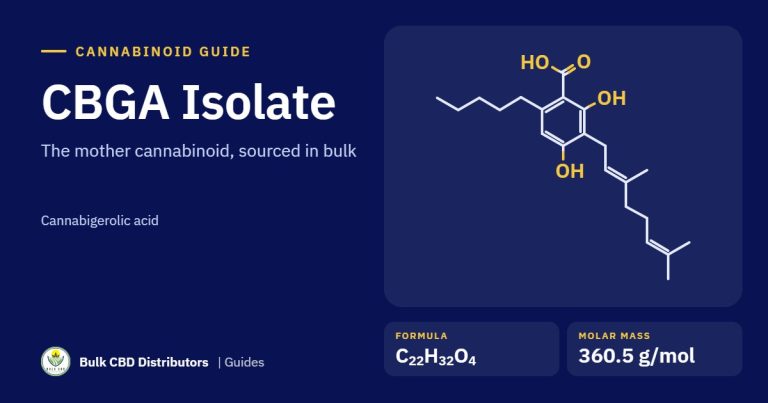
CBG begins as CBGA (cannabigerolic acid), the primary precursor cannabinoid synthesized early in the hemp plant's growth cycle. As the plant matures, enzymatic processes convert the majority of CBGA into CBDA, THCA, and CBCA, the acidic precursors of CBD, THC, and CBC respectively. In a standard CBD-dominant hemp cultivar, this conversion is nearly complete by harvest, leaving only trace CBG in the final plant material (typically 0.5% to 1% by dry weight).
The commercial CBG market was made possible by the development of CBG-dominant hemp genetics, where the enzymatic conversion from CBGA to other cannabinoids is intentionally limited. These specialized cultivars hold 10% to 15% CBG at harvest rather than the sub-1% levels found in standard CBD hemp, making extraction economically viable at commercial scale. The genetics work required to develop stable CBG-dominant varieties is a real cost that is reflected in CBG's price premium over CBD; it is not markup on a commodity.
CBG Product Forms Explained
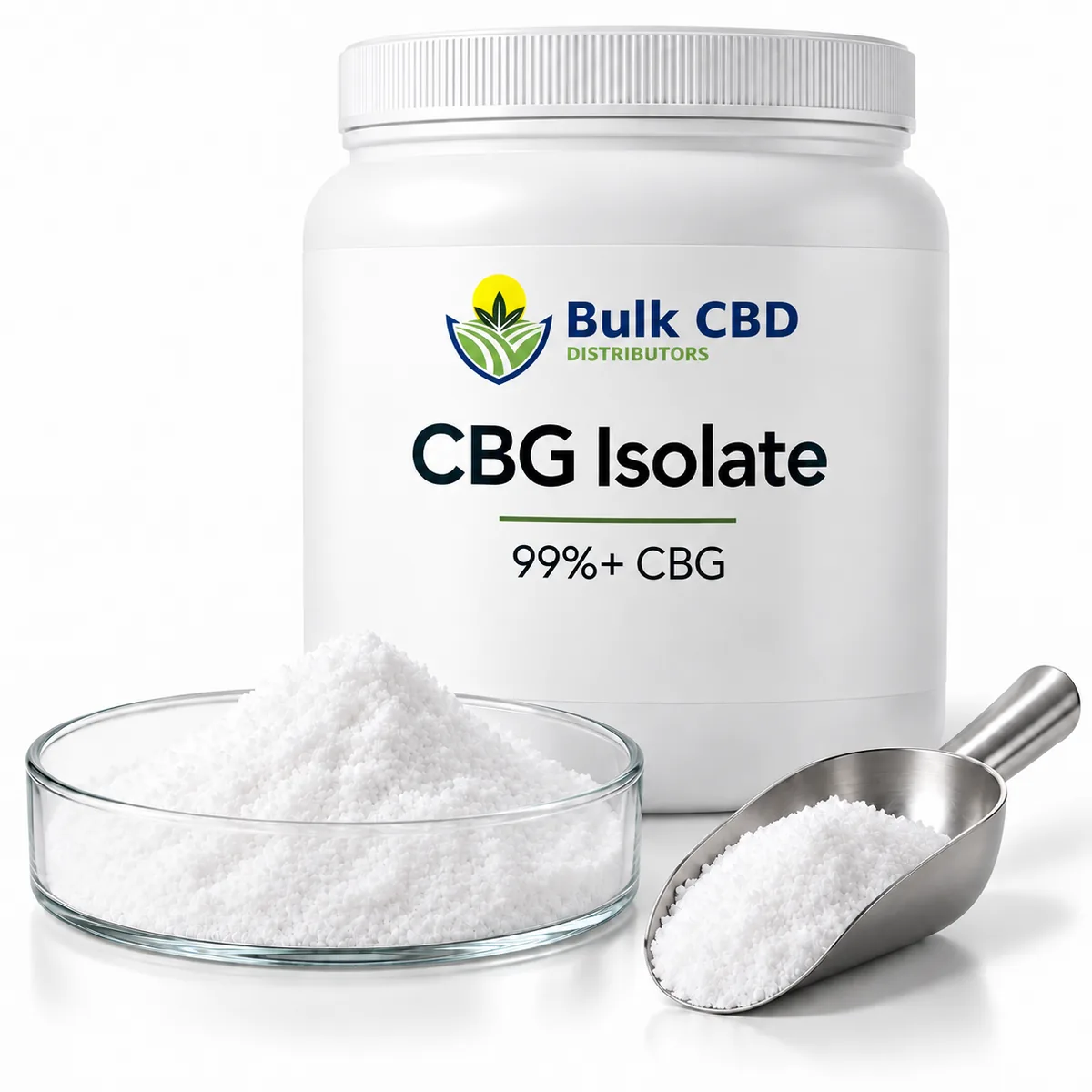
CBG is available in the same refined forms as CBD, each appropriate for different formulation and application contexts:
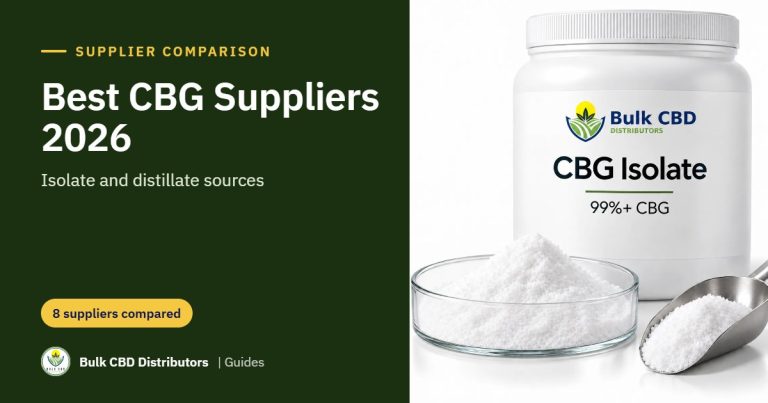
CBG isolate: Cannabigerol refined to 99% or higher purity, with all other plant compounds removed. The most precise form for dose-controlled formulations. CBG isolate has a white crystalline appearance similar to CBD isolate but with some important handling differences covered below.
CBG distillate: A concentrated CBG extract typically containing 80 to 95% cannabigerol, with the balance composed of minor cannabinoids and terpenes retained through the distillation process. More cost-effective than isolate for formulations that do not require single-cannabinoid precision. CBG distillate runs 2x to 5x the per-gram cost of comparable CBD distillate.
CBG flower: Hemp flower from CBG-dominant cultivars, dried and prepared for retail smokable formats or as extraction feedstock. CBG flower requires careful harvest timing, as with any hemp, to balance cannabinoid content against total THC compliance.
CBG oil: CBG in a carrier oil solution, typically MCT or hemp seed oil, at a standardized concentration. Used in tincture and softgel formulations where a pre-diluted, oil-phase CBG ingredient is operationally convenient.
| Form | Typical CBG | Physical form |
|---|---|---|
| CBG isolate | 99%+ | White crystalline powder; recrystallizes readily |
| Broad spectrum CBG distillate | 80 to 95% | Gold to amber oil; minor cannabinoids retained |
| Crystal resistant CBG distillate | 45 to 60%+ | Oil formulated to stay pourable |
| Water soluble CBG | Around 20% | Powder or liquid |
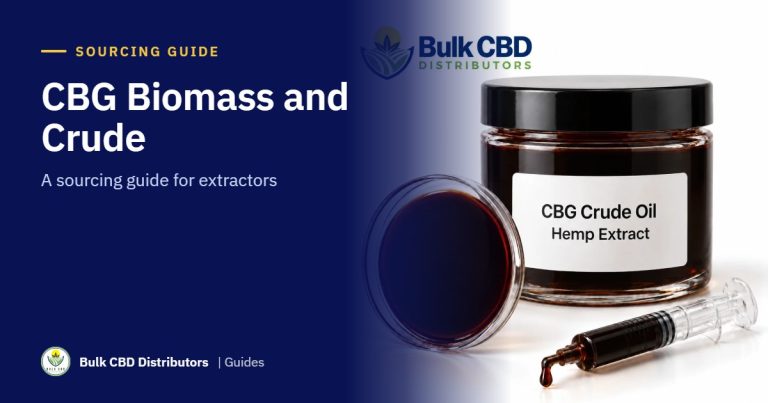
| CBG biomass | Typically 10 to 15% | Plant material from CBG cultivars |
CBG vs. CBD: The Key Differences for Formulators
CBG and CBD are structurally similar cannabinoids with some meaningful differences in behavior and formulation economics. Understanding these differences helps a formulator decide where CBG earns its cost premium and where CBD remains the more sensible choice.
Price: CBG consistently commands a 2x to 5x premium over equivalent CBD forms. This reflects the higher cost of CBG-dominant genetics, the smaller supply base, and the lower cannabinoid yield per kg of input biomass relative to CBD-optimized cultivars. A CBG addition to a formulation needs a product story that justifies the cost differential.
Crystallization: CBG isolate has a low melting point (about 50 C), so it can soften and cake in warm storage, and CBG can crystallize out of liquid formulas at high loadings. This affects storage, handling, and filling equipment operation, particularly for liquid-format products like tinctures and softgels where crystallized ingredient causes processing problems. It is worth planning for this property before a first CBG isolate order arrives.
Formulation rationale: The most defensible CBG formulations are those where the cannabinoid plays a specific role in the product story: skincare lines where CBG's profile is a stated ingredient, combination cannabinoid tinctures where CBG contributes to the full-spectrum character, or precisely dosed capsule formats. CBG added at trace levels without a product narrative is cost without story. The same sourcing discipline that applies to CBD applies to CBG, plus the additional supply chain considerations that come with a smaller, less commoditized market.
| Property | CBG isolate | CBD isolate |
|---|---|---|
| Purity | 99%+ | 99%+ |
| Recrystallization | Recrystallizes more readily; plan storage and fill temperatures | Less prone to recrystallize |
| Where it fits | Products where CBG has a stated role in the product story | The established, lower-cost baseline for most formulations |
For a full side-by-side, see CBG vs. CBD: The B2B Formulator's Comparison Guide.
Applications by Product Category
CBG has established a presence across several product categories where its properties justify the cost premium:
Skincare and topicals: CBG is one of the more active minor cannabinoids in topical formulation contexts, and brands building ingredient stories around multi-cannabinoid profiles are including it in face oils, serums, and targeted topicals. The oil-phase compatibility of CBG distillate and isolate makes it straightforward to incorporate into most topical formulation systems.
Tinctures and sublingual formats: CBG is commonly added to CBD-dominant tinctures at 5 mg to 20 mg per serving to create a multi-cannabinoid formulation. The addition changes the product's full-panel COA in a way that can be featured on labeling and in marketing, which is where the brand value originates.
Capsules and softgels: The precision dosing possible with CBG isolate makes it well-suited for encapsulated formats. The crystallization management requirement is easier to address in a solid-format product than in a liquid one, making capsules a natural fit for CBG isolate incorporation.
Specialized applications: CBG has attracted research interest in specific niche applications. Buyers in this segment are typically research-stage formulators with specific purity and documentation requirements, so a full lot-specific COA matters most here.
CBG Pricing: What the Premium Reflects
CBG commands a per-gram price premium of 2x to 5x over equivalent CBD forms across all product types. Understanding where this premium originates helps buyers evaluate whether a given price quote represents fair market value or unusual markup in either direction.
The premium has three roots:
- Genetics: CBG-dominant cultivars require specialized breeding and ongoing seed stock management.
- Yield: CBG-dominant hemp produces fewer total cannabinoid grams per acre than optimized CBD cultivars.
- Scale: The CBG extraction and processing infrastructure is smaller than the CBD infrastructure, meaning economies of scale are less developed.
All three factors are real and ongoing, not transitional. The CBG premium is unlikely to reach CBD price levels within the near-term commercial horizon.
How to Evaluate a CBG Supplier
The supplier evaluation framework for CBG is similar to CBD with additional attention on three points:
Genetics transparency: A CBG supplier who can describe the cultivar genetics behind their flower or biomass source material is one who understands their supply chain. Ask which CBG-dominant genetics were used and whether the source farm uses stable seed stock. This affects lot-to-lot consistency and your ability to reorder reliably.
Crystallization management: Ask directly how the supplier stores and ships CBG isolate and whether they have observed crystallization in finished lots. A supplier who has not encountered this property in their CBG isolate is either new to the product or not paying attention to how their customers use it.
Lot-specific COA with minor cannabinoid panel: CBG lots from different genetics and harvest timings will carry different residual CBD percentages in the distillate. For formulations where CBG purity matters, confirm the minor cannabinoid breakdown on the specific lot being purchased.
From the Field
"Before 2021, standard hemp varieties produced 0.5% to 1% CBG at harvest, which made extraction completely uneconomical: the yield per acre did not justify the processing cost. The development of CBG-dominant genetics that hold 10% to 15% CBG through harvest is what created the commercial CBG market. That genetics development is expensive to do well, and the farms growing CBG-dominant varieties are working with specialized seed stock that costs more to maintain than a standard CBD hemp program. When buyers ask why CBG costs so much more than CBD, the honest answer is that it reflects a genuine supply constraint rooted in genetics and scale, not a markup on a commodity. Understanding that economics is part of sourcing CBG intelligently. It helps you evaluate whether a given price is fair, whether an unusually low price is a red flag, and why lot-to-lot consistency requires working with suppliers who have stable, high-CBG genetics in their supply chain."
John Piccone, Founder, Bulk CBD Distributors
Section 781 and CBG
CBG is a non-intoxicating cannabinoid generally expected to remain within the hemp definition, provided total THC limits are met, under Section 781 of P.L. 119-37. That does not mean CBG is untouched. Section 781 affects CBG the same way it affects CBD and the other cannabinoids: total THC (including THCA) counts toward the hemp definition, cannabinoids that cannot be naturally produced by the plant are excluded, and from December 11, 2026 finished consumer products are capped at 0.4 mg total THC per container. A CBG product line stays viable when its ingredients carry low, documented THC on the COA and each finished product passes the per-container check. For a full breakdown of how Section 781 affects each cannabinoid, see our 2026 hemp law guide.
To see how CBG fits alongside CBC, CBN, CBDV and the acid forms, read Minor and Rare Cannabinoids Explained.
Frequently Asked Questions
What is CBG?
CBG (cannabigerol) is a non-intoxicating cannabinoid found in hemp; its acid form, CBGA, is the biosynthetic precursor to CBDA, THCA, and CBCA. In standard hemp cultivars, most CBG converts to other cannabinoids before harvest, leaving trace amounts. CBG-dominant hemp genetics developed over the past several years hold 10% to 15% CBG at harvest, making commercial extraction economically viable.
What forms does CBG come in?
CBG is available as isolate (99%+ purity), distillate (80 to 95% CBG), flower (from CBG-dominant cultivars), and carrier oil solutions. Each form is appropriate for different formulation and application contexts.
Why does CBG cost more than CBD?
CBG commands a 2x to 5x premium over equivalent CBD forms because of three underlying supply constraints: CBG-dominant hemp genetics are specialized and expensive to develop and maintain, yield per acre is lower than CBD-optimized cultivars, and the processing infrastructure is smaller with less developed economies of scale. These are structural factors, not transitional ones.
What is the typical CBG potency in wholesale CBG isolate?
Quality wholesale CBG isolate carries 99% or higher cannabigerol purity by weight. The minor cannabinoid balance (typically residual CBD) should be detailed on the lot-specific COA. For formulations requiring single-cannabinoid precision, confirm the full minor cannabinoid panel before accepting a lot.
Is CBG compliant under Section 781 of P.L. 119-37?
CBG is generally expected to remain within the hemp definition under Section 781 of P.L. 119-37, but section 781 affects CBG the same way it affects CBD and the other cannabinoids: total THC (including THCA) counts toward the hemp definition, cannabinoids that cannot be naturally produced by the plant are excluded, and from December 11, 2026 finished consumer products are capped at 0.4 mg total THC per container. Choose CBG ingredients with low, documented THC on the COA and run the per-container math for each finished product.
What is the minimum order for CBG at BCD?
Minimums at BCD are 100g to 1kg depending on the product. Current sizes, specs and the representative COA are listed on each product page.
Does CBG isolate crystallize?
Yes. CBG isolate can cake in warm storage because of its low melting point (about 50 C), and CBG can crystallize out of liquid formulas at high loadings. This is a physical property of the molecule, not a quality defect. Managing it requires appropriate storage conditions and, for liquid-format products, temperature control during production. Ask your supplier how lots are stored and shipped.
What applications is CBG commonly used in?
CBG is used in skincare and topicals, multi-cannabinoid tinctures and sublingual formats, encapsulated products, and specialized applications. The most defensible CBG formulations are those where the cannabinoid plays a specific, stated role in the product story rather than appearing at trace levels without narrative.
How do I evaluate a CBG supplier?
The key evaluation criteria for a CBG supplier are: genetics transparency (can they describe the source cultivar?), understanding of crystallization behavior (have they addressed it with other customers?), and lot-specific COA with full minor cannabinoid panel. A CBG supplier who cannot address these points has limited direct experience with the product.
What is the difference between CBG and CBD in formulation?
CBG and CBD are structurally related cannabinoids with some meaningful differences: CBG costs 2x to 5x more per gram, can crystallize out of liquid formulas at high loadings, and requires a specific product narrative to justify its inclusion. CBD is the established, lower-cost baseline for most multi-cannabinoid formulations; CBG adds a differentiation layer where the product story supports the cost premium.
Compare CBG Forms and COAs
If you are weighing forms, you can compare current CBG isolate specs and COAs, or see every form on the wholesale CBG page. BCD carries CBG isolate, distillate and oil, and CBG flower is being restocked. We are glad to answer questions or put together a quote.