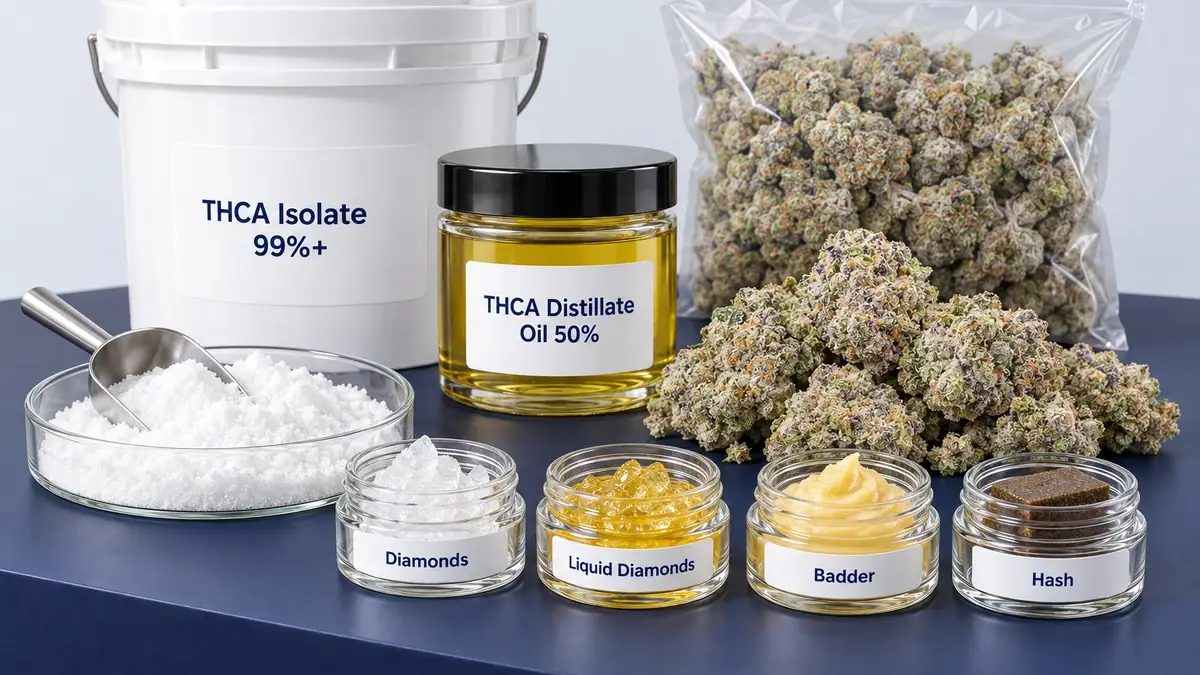
THCA concentrates are hemp extracts and resin products that hold far more THCA than flower, and their names describe three different things: the starting material (live or cured), the process (solvent or solventless) and the texture (badder, sauce, crumble or shatter). Rosin is pressed without solvents, live resin is solvent-extracted from fresh-frozen plants, and badder, crumble and shatter are textures. Texture does not tell you THCA content: on our representative COAs, sugar crumble tests higher than rosin and shatter tests lower than wax. This guide explains each type, shows how they compare on a COA, and matches them to common products.
3 questions
Starting material, process and texture
33% to 99%+
THCA across the types on our representative COAs
Rosin
Pressed with heat and pressure, no solvent
Live resin
Solvent-extracted from fresh-frozen plants
The Three Questions Behind Every Concentrate Name
Concentrate names get confusing because a single label can mix three separate ideas. "Live rosin badder" uses all three at once. Ask these questions and almost any label makes sense:
- What did it start as? "Live" means fresh-frozen plants, frozen right after harvest to hold on to terpenes. Cured means dried flower or trim.
- How was it made? Solvent-extracted products use a solvent such as butane, propane or ethanol, which is later purged. Solventless products use only heat, pressure, ice, water or screens.
- How does it feel? Badder, crumble, wax, shatter and sauce are textures. They mostly reflect how the extract was whipped, purged, cured or left to crystallize.
Because texture is separate from process, one word can appear on both sides. Badder is usually a solvent product, but rosin badder exists too. Check how a product was made rather than assuming it from the name.
THCA Concentrate Types Compared
THCA figures are from BCD's representative COAs and vary by batch. Other suppliers' products can test quite differently.
| Type | Process | Texture | THCA (representative) | Smallest BCD size |
|---|---|---|---|---|
| Rosin | Solventless | Sticky, sappy to creamy | 76.1% | 1 oz |
| Live resin | Solvent, fresh-frozen | Glossy and saucy | 63.2% | 50g |
| Badder | Usually solvent | Soft and whipped | See the batch COA | 1 oz |
| Sugar sauce | Solvent | Wet and grainy | See the batch COA | 100g |
| Diamonds in HTE sauce | Solvent | Crystals in liquid | 93.8% | 100g |
| Sugar crumble | Solvent | Dry and granular | 92.4% | 50g |
| Wax | Solvent | Soft and opaque | 73.9% | 50g |
| Shatter | Solvent | Glassy, snaps | 44.6% | 225g |
| Live HTE | Solvent, fresh-frozen | Terpene-rich liquid | 32.8% | 50g |
| Hash | Solventless, pressed | Dense block | 37.0% | 50g |
| Kief | Solventless, sifted | Fine and sandy | 34.3% | 1 lb |
Solventless Concentrates: Rosin, Hash and Kief
Solventless products separate resin from the plant by physical means only. That appeals to brands that want a clean process story, though it still needs testing like anything else.
THCA rosin
Rosin is resin pressed out with heat and pressure. Flower rosin is pressed directly from flower. Hash rosin is pressed from hash, usually ice water hash, and is generally the more refined of the two. Live rosin is hash rosin that starts from fresh-frozen plants. Our THCA rosin tested at 76.08% THCA on the representative COA and comes in a bulk jar or 1g pucks.
Hash
Hash is collected trichome resin, pressed or worked into a dense form. Ice water hash uses cold water and agitation to knock trichomes loose, then fine screens to collect them. On menus you will see traditional style names such as Afghani, Moroccan and Nepalese temple ball, which describe a style and form. Manali cream is another style name. Hash usually tests lower in THCA than rosin, and some types carry meaningful CBD: our representative THCA hash result shows 37.0% THCA and 18.5% CBD.
Kief
Kief is trichome heads sifted from dried flower and trim, collected as a fine, sandy powder. It is the simplest form of concentrate and is mostly used in blends, coatings and pressing. THCA kief lists 34.3% THCA on our representative COA.
Solvent-Extracted Concentrates: Live Resin, Badder, Sauce, Crumble, Wax and Shatter
These start with a solvent extraction, then get their texture from what happens next. Because a solvent is used, the residual solvent panel on the COA matters for every one of them.
THCA live resin
Live resin is extracted from plants frozen right after harvest instead of dried, which aims to hold on to terpenes that drying and curing can lose. Our THCA live resin has a glossy, saucy consistency and shows 63.2% THCA on the representative COA.
THCA badder, budder and batter
These three names mean nearly the same thing: an extract whipped during purging into a soft, frosting-like texture. Badder holds its shape well and is easy to portion, which makes it popular for repacking and pre-roll infusion. THCA badder comes in a bulk jar or 1g pucks.
THCA sauce and sugar
Sauce is a mix of crystals and terpene-rich liquid. Left to rest, an extract separates by itself: THCA crystallizes and terpenes collect around it. Sugar sauce has small crystals and a wet, grainy texture, like our THCA sugar sauce. Diamonds in sauce have larger crystals. The liquid on its own is high terpene extract, or HTE, sold as THCA live HTE. Our guide to what THCA diamonds are covers the crystal side in depth.
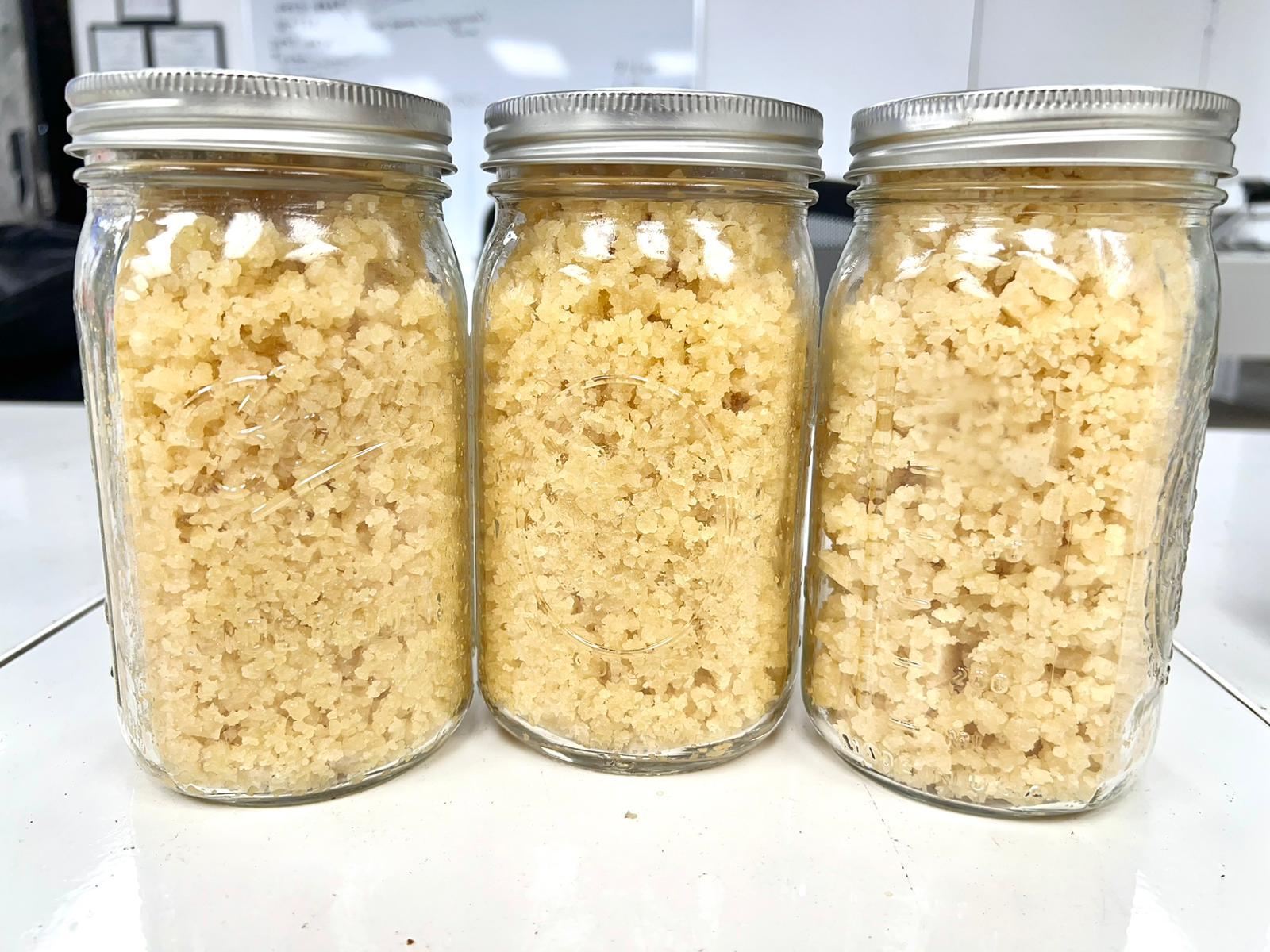
THCA crumble
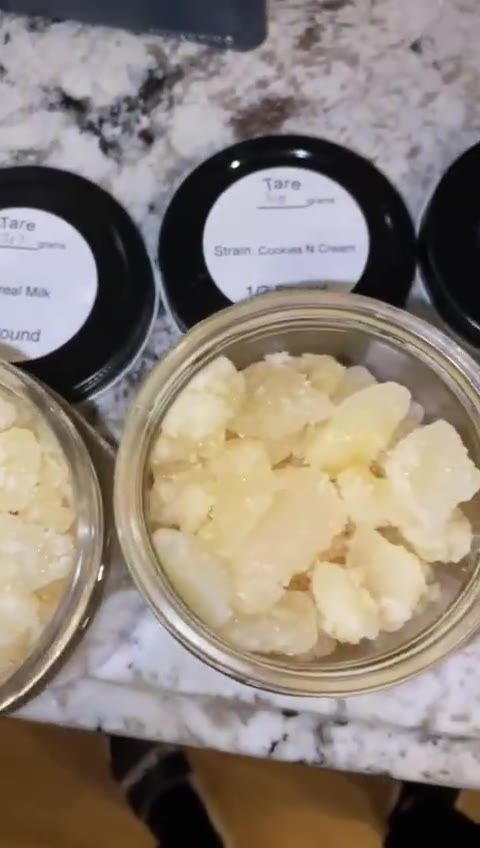
Crumble is a dry, honeycomb-like or sugary concentrate that breaks apart easily, which helps with weighing. It usually comes from a longer purge or a whipped extract. THCA sugar crumble tests high, at 92.4% THCA on our representative COA.
THCA wax
Wax is a soft, opaque concentrate with a smooth, easy-to-portion consistency. The line between wax, badder and crumble is loose, and sellers draw it differently. Our representative THCA wax result shows 73.9% THCA and 14.3% CBD.
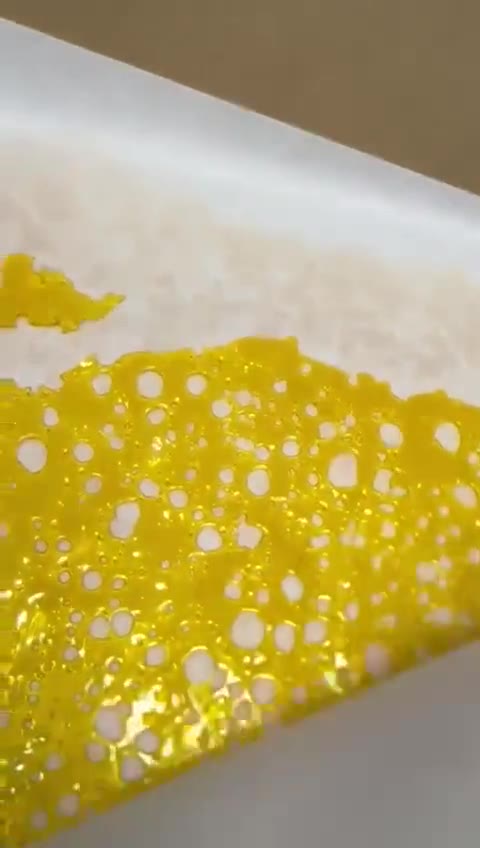
THCA shatter
Shatter is a glassy, translucent sheet that snaps when handled. It is left undisturbed after purging so that it sets into glass and does not crystallize. THCA shatter shows 44.6% THCA on our representative COA, a useful reminder that clear, clean-looking material is not automatically higher in THCA.
Live Resin vs Rosin
This is the comparison buyers ask about most, and the two names sound closer than the products are.
| Factor | Live resin | Rosin |
|---|---|---|
| Process | Solvent extraction, then purging | Heat and pressure only |
| Starting material | Fresh-frozen plants | Flower, hash or, for live rosin, fresh-frozen hash |
| Key COA line | Residual solvents | Pesticides, since nothing is purged away |
| Selling point | Terpene-rich and scalable | No solvents in the process |
Neither is automatically higher in THCA or better. Price by type also varies widely across suppliers, so compare the actual quotes.
Pro Tip: Ask How the Product Was Made
Labels are loose in this market. Some products called live resin are blends of high terpene extract and isolate, and some sold as live rosin are crystals with rosin terpenes added. Blends can be perfectly good products, but they are different products. Ask the seller directly before you compare prices.
Snowcaps and Infused Flower
Snowcaps, or snow caps, are not a concentrate in the strict sense. They are flower coated in THCA isolate, which gives buds a frosted white look and a much higher THCA reading than plain flower. Our THCA Snow Caps are light assist buds with a representative result of 49.7% THCA. Moon rocks and other infused flower follow the same idea with different coatings, such as concentrate and kief. Our guide to THCA flower grades explains the flower underneath.
Comparing concentrates for a product line?
Tell us what you are making and your volume, and we will point you to the types that fit. See the full range on the THCA concentrates collection, or call (303) 339-0343.
How THCA Concentrate Types Compare on a COA
A chart like this explains why THCA percentage alone is a poor way to rank concentrates. Live HTE is low in THCA because it is meant to carry terpenes. Wax and hash can hold large amounts of CBD. When you read a concentrate COA, check these lines:
- THCA and Delta-9 THC, separately. Concentrates can carry much more Delta-9 THC than flower. Our representative live resin result shows 1.65% and live HTE 15.23%.
- Total THC. Total THC is (0.877 x THCA) + Delta-9 THC, the formula in the USDA hemp rule. Live HTE at 32.8% THCA and 15.23% Delta-9 THC works out to about 44.0%, and live resin at 63.2% and 1.65% to about 57.1%. Our total THC guide has more examples.
- Other cannabinoids. Look at what else makes up the total, especially CBD in wax and hash.
- Residual solvents. Essential for anything solvent-extracted.
- Pesticides, heavy metals and microbials. Concentrating resin can concentrate contaminants too, and that applies to solventless products as well.
- Terpenes. If you are paying more for a terpene-rich product, a terpene panel shows what you are getting.
Our guide on how to read a hemp COA covers the full report.
Which THCA Concentrate Fits Which Product?
| If you are making... | Start with | Why |
|---|---|---|
| A solventless line | Rosin, hash | No solvent in the process |
| A terpene-forward jar | Live resin, sugar sauce | Aroma is the selling point |
| Pre-portioned units | Rosin or badder pucks | Pre-portioned 1g units |
| Infused pre-rolls | Badder, crumble, kief | Easy to portion or coat |
| Blends where flavor matters | Live HTE | Brings terpenes to a blend |
| A high-THCA input | Diamonds, isolate, crumble | Highest THCA per gram |
Two habits help whichever type you choose. Compare on cost per gram of THCA where the concentrate is an input, and test a small amount in your own process first, since textures behave differently in machines and fill lines.
Storing THCA Concentrates
Keep concentrates sealed, cold or cool, and dark. Heat converts THCA to Delta-9 THC and drives off terpenes, and terpene-rich types lose the most. Textures also change over time: shatter and resin can start to crystallize, and sauces can separate. Mix a sauce evenly before you portion it, so each unit gets its share of crystals and liquid.
Compliance Note: This guide is general information and not legal advice. Rules on THCA concentrates differ by state and change often, so check the rules wherever you make or sell products before you order.
THCA Concentrates From BCD
We carry the types in this guide by bulk weight, working with many manufacturers and suppliers across the industry to keep the range wide. Sizes run from 1 oz or 50g on most types up to 1kg, with larger volumes by quote. Listed COAs are representative, and the batch COA ships with every order. Place your order online, and we email your payment link once it is confirmed. Most concentrates ship within 2 to 3 business days of payment.
See Every Concentrate Type
Browse rosin, live resin, badder, sauce, crumble, wax, shatter, hash and kief on the THCA concentrates collection, or tell us what you need.
Frequently Asked Questions
What are the types of THCA concentrates?
Common types include rosin, hash, kief, live resin, badder, sauce, crumble, wax, shatter and diamonds. Their names describe the starting material, the process or the texture, so one product can carry more than one of these labels.
What is THCA rosin?
THCA rosin is a solventless concentrate made by pressing hemp flower or hash with heat and pressure. Hash rosin is pressed from hash, and live rosin starts from fresh-frozen plants.
What is THCA live resin?
THCA live resin is a solvent-extracted concentrate made from plants frozen right after harvest, which aims to keep more terpenes than dried material would.
What is the difference between live resin and rosin?
Live resin is made with a solvent from fresh-frozen plants, and rosin is pressed with heat and pressure and no solvent. Check residual solvents on a live resin COA and pesticide results on a rosin COA.
What is THCA badder?
THCA badder, also called budder or batter, is a concentrate with a soft, whipped texture. It is easy to portion, which makes it common for repacking and infused pre-rolls.
What is the difference between badder and crumble?
Badder is soft and whipped, while crumble is dry and breaks apart. Both are textures, and the THCA percentage depends on the product, not the name.
What is THCA crumble?
THCA crumble is a dry, granular or honeycomb-like concentrate that breaks apart easily for weighing and processing. Our representative sugar crumble result shows 92.4% THCA.
What is THCA sauce?
THCA sauce is a mix of THCA crystals and terpene-rich liquid. Sugar sauce has small crystals, and diamonds in sauce have larger ones.
Are THCA snow caps a concentrate?
Not strictly. Snow caps are flower coated in THCA isolate, which raises the THCA reading well above plain flower. Our representative result shows 49.7% THCA.
Which THCA concentrate has the highest THCA?
Diamonds and isolate usually test highest, often above 99%. Crumble and diamonds in sauce can also test above 90%, while terpene-rich liquids and hash test much lower.
Do THCA concentrates need residual solvent testing?
Anything made with a solvent should show a residual solvent panel on the COA. Solventless products do not use solvents, but they should still show contaminant results.