CBD stands for cannabidiol, a natural compound made by the hemp plant. The name joins "cannabi-," from Cannabis, with "-diol," the chemistry term for a molecule carrying two hydroxyl (OH) groups. Cannabidiol has the formula C21H30O2 and a molar mass of about 314.5 g/mol, and it is one of more than 100 cannabinoids found in the plant. Brands that buy cannabidiol wholesale see the same compound sold as isolate, distillate, crude and water soluble forms. This guide explains the name, where CBD comes from, what the other cannabinoid abbreviations mean and how CBD is measured on a spec sheet.
| Spec | At a glance |
|---|---|
| Full name | Cannabidiol |
| Chemical formula | C21H30O2 |
| Molar mass | About 314.5 g/mol |
| Made by | The hemp plant, first as CBDA (cannabidiolic acid) |
| How CBDA becomes CBD | Heat removes a carboxyl group (decarboxylation) |
| Common bulk forms | Isolate 99%+, distillates 45 to 95%, crude 50 to 70%, water soluble about 20% |
CBD Meaning: Breaking Down the Name
Chemists name many plant compounds after their source and their structure, and cannabidiol follows that pattern:
- Cannabi- points to the Cannabis plant genus, which includes hemp.
- -diol means the molecule has two hydroxyl (OH) groups, both on its aromatic ring.
- CBD is the short form, taken from CannaBiDiol.
The full structure and identifiers are listed on the PubChem cannabidiol record, which is where chemists check formula, mass and naming. Outside the hemp world, "CBD" also means central business district in city planning, which is why search results sometimes mix the two.
Cannabinoid Abbreviations Explained
Most cannabinoid names follow the same shorthand. The ones buyers see most often:
| Abbreviation | Stands for | Notes |
|---|---|---|
| CBD | Cannabidiol | The main cannabinoid in most hemp |
| CBDA | Cannabidiolic acid | The raw form the plant makes; CBDA guide |
| CBG | Cannabigerol | CBG guide |
| CBGA | Cannabigerolic acid | The precursor to CBDA, THCA and CBCA; CBGA guide |
| CBN | Cannabinol | CBN guide |
| CBC | Cannabichromene | CBC guide |
| CBDV | Cannabidivarin | A shorter-chain relative of CBD; CBDV guide |
| THC | Tetrahydrocannabinol | Usually Delta-9 THC; the compound the hemp THC limits are written around |
| THCA | Tetrahydrocannabinolic acid | Counted in total THC on a COA |
The pattern helps when reading a COA: an "A" at the end means the acid form, and "V" names mark the varin family, which carries a shorter side chain. Our minor and rare cannabinoids guide covers the less common ones in depth.
Where Cannabidiol Comes From
Hemp does not make CBD directly. The plant builds CBGA, converts much of it to CBDA, and stores that acid in the resin glands (trichomes) of the flower. When the extract is heated during processing, CBDA loses a carboxyl group as carbon dioxide and becomes CBD. That step, decarboxylation, also explains a number on every COA:
total CBD = CBD + (CBDA x 0.877)
The 0.877 factor is the molar mass of CBD (314.5) divided by that of CBDA (358.5), so 1 g of CBDA yields at most about 0.877 g of CBD. From there, the extract is refined in stages, from crude to distillate to isolate. Our guide to how distillate is made walks through each step.
A Short History of the Name
Cannabidiol was first isolated from cannabis plant material in 1940, by research groups in the United States and the United Kingdom working at the same time. Its full chemical structure was worked out in 1963 by Raphael Mechoulam and Yuval Shvo in Israel, and the CBD abbreviation followed into common scientific use. In 2018 the FDA approved its first prescription drug containing purified cannabidiol; CBD sold as a hemp ingredient is a separate category from that drug.
Is Cannabidiol the Same as CBD?
Yes. Cannabidiol and CBD are the same molecule; one is the full name and one is the abbreviation. On labels and documents you will see it written several ways:
- CBD or cannabidiol on front labels and facts panels.
- Cannabidiol as the ingredient name on cosmetic ingredient lists.
- Hemp extract or a named grade, such as CBD isolate or broad spectrum distillate, on spec sheets and COAs.
Cannabidiol is not the same as hemp seed oil, which is pressed from seeds and carries little or no CBD. The hemp oil vs CBD oil guide covers how to tell them apart on a label.
Sourcing cannabidiol for a product line?
Tell us the form, potency and THC status you need, and we will check current lots. MOQs run 100g to 1kg depending on the product. Request a wholesale quote or browse the COA library.
The Forms of CBD Buyers See on a Spec Sheet
| Form | Typical CBD content | What it is | Common uses |
|---|---|---|---|
| CBD isolate | 99%+ | Crystalline powder of nearly pure cannabidiol | Tinctures, gummies, topicals, THC-free lines |
| Broad spectrum distillate | 80 to 95% | Refined oil with other cannabinoids, THC reduced | Tinctures, softgels, edibles |
| Full spectrum distillate | 75 to 85%+ | Refined oil keeping the plant's cannabinoid range | Oils and topicals; Standard and Compliant versions |
| Crystal resistant distillate | 45 to 60%+ | Distillate made to stay liquid | Tinctures, cartridges, liquid fills |
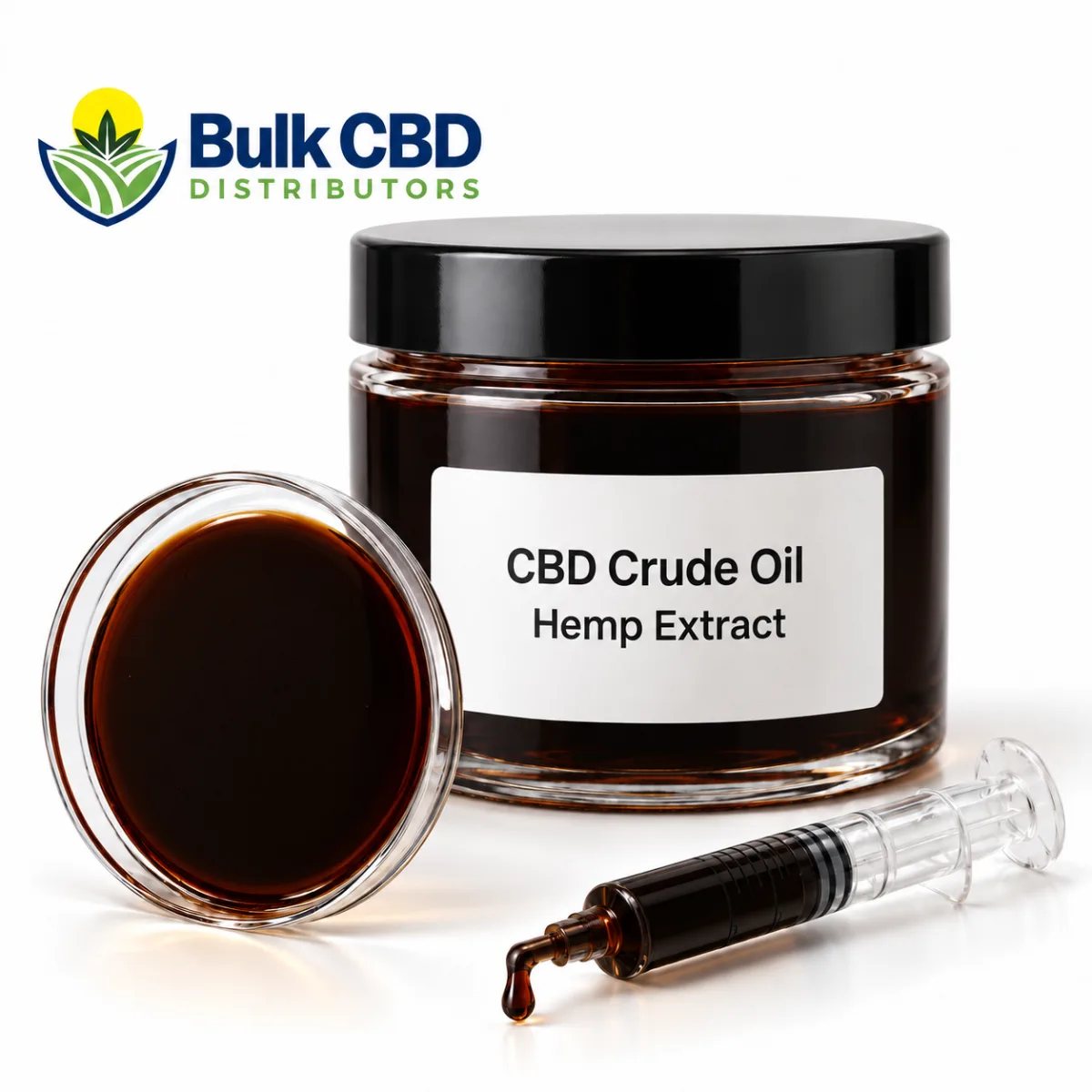
| CBD crude oil | 50 to 70% | First winterized extract from hemp | Further refining, some topicals |
| Water soluble CBD | About 20% | CBD in a fine emulsion, powder or liquid | Drinks, gummies, powders |
The full vs broad spectrum vs isolate guide explains how to choose between them.
How CBD Is Measured on a COA
A certificate of analysis reports cannabidiol as a percent by weight, in mg per gram, or both. Percent times 10 gives mg per gram, so 99% isolate is 990 mg/g and 20% water soluble CBD is 200 mg/g. Total CBD adds the CBDA contribution using the 0.877 factor. Our COA reading guide shows where each number sits on the report.
Does Section 781 Ban CBD?
No. Section 781 of P.L. 119-37 does not ban plant-derived cannabidiol, but it changes what a finished product can contain. From December 11, 2026, finished hemp products are limited to 0.4 mg of total THC per container, and that applies to CBD products along with every other hemp cannabinoid product. In practice that favors non-detect inputs such as isolate and Non-Detect broad spectrum distillate. The 2026 hemp law guide covers the full timeline.
How BCD Supplies Cannabidiol
We sell cannabidiol in every common bulk form, from isolate to crude, and each order ships with the batch COA for the lot you receive. Since 2020 we have built relationships with hemp manufacturers, distributors and brands across the supply chain, which is how we source consistent lots. Testing is done by ISO 17025-accredited third-party labs.
When you place an order request, we confirm availability and your total before taking payment. Most orders ship the same or next day once paid, some take up to three business days, packed in plain boxes with no product branding outside.
What This Means for Your Business
- CBD and cannabidiol are interchangeable names; use whichever your label format calls for.
- Read total CBD, not just CBD, when a COA lists CBDA.
- Know the abbreviations so you can compare spec sheets across cannabinoids.
- Choose forms by THC status for products that will sell after December 11, 2026.
Frequently Asked Questions
What does CBD stand for?
CBD stands for cannabidiol, a natural compound made by the hemp plant.
What does cannabidiol mean?
The name combines cannabi-, from the Cannabis plant, with -diol, meaning a molecule with two hydroxyl (OH) groups.
Is cannabidiol the same as CBD?
Yes. Cannabidiol is the full name and CBD is the abbreviation for the same molecule.
What is the chemical formula of CBD?
C21H30O2, with a molar mass of about 314.5 g/mol.
What is the difference between CBD and CBDA?
CBDA is the acid form the plant makes. Heat converts CBDA to CBD by removing a carboxyl group, so 1 g of CBDA yields at most about 0.877 g of CBD.
What do CBG, CBN and CBC stand for?
CBG is cannabigerol, CBN is cannabinol and CBC is cannabichromene.
When was CBD discovered?
Cannabidiol was first isolated in 1940, and its structure was determined in 1963 by Raphael Mechoulam and Yuval Shvo.
Is CBD the same as hemp oil?
No. Hemp seed oil is pressed from seeds and contains little or no CBD. CBD oil is cannabidiol dissolved in a carrier oil.
What does total CBD mean on a COA?
Total CBD is the CBD present plus the CBD that the CBDA would yield: CBD + (CBDA x 0.877).
Does Section 781 ban CBD?
No. It does not ban plant-derived cannabidiol, but it limits finished hemp products to 0.4 mg of total THC per container from December 11, 2026, which applies to CBD products too.