The best CBD carrier oil for most products is MCT oil, because it is neutral in taste, stays liquid, resists oxidation and dissolves CBD well; hemp seed, olive, avocado, coconut, grapeseed and jojoba oils each fit specific formats and labels better. The carrier does not set the strength of a product, the CBD input does, but it decides taste, texture, shelf life and how the oil behaves in cold storage. For brands sourcing bulk CBD oil ingredients, this guide compares the common carrier oils, gives typical densities for fill math, and lays out a simple way to test a carrier before a production run.
| Spec | At a glance |
|---|---|
| Most common carrier | MCT oil (caprylic and capric triglycerides) |
| Most stable | MCT oil and jojoba |
| Shortest shelf life | Hemp seed and grapeseed oil (high in polyunsaturated fats) |
| Typical density | About 0.86 to 0.95 g/mL, depending on the oil |
What Is a CBD Carrier Oil?
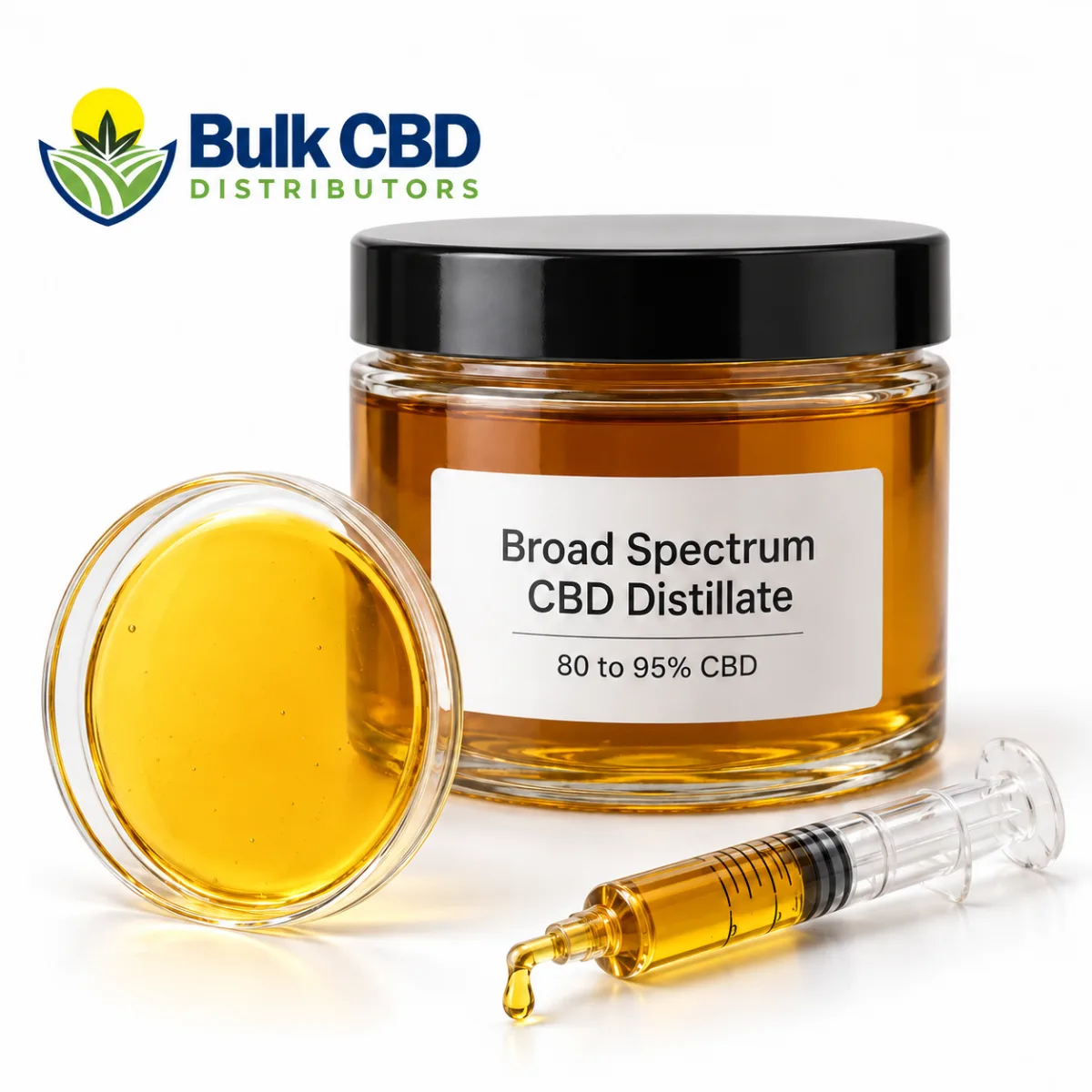
A carrier oil is the base a CBD concentrate is dissolved into. CBD is fat soluble, so it mixes into oils, not water. A 1,000 mg tincture in a 30 mL bottle is typically about 1 g of CBD input and 29 mL of carrier, so the carrier is nearly all of what the customer tastes, feels and sees. The concentrate itself, such as CBD isolate or CBD distillate, sets the strength and the label claims.
Drinks are the exception. Water-based products use water soluble CBD, a powder or liquid emulsion that disperses in water, instead of a carrier oil.
CBD Carrier Oils Compared
| Carrier oil | Taste | Oxidation stability | In the cold | Best formats |
|---|---|---|---|---|
| MCT oil | Neutral | High | Stays liquid | Tinctures, softgels, pet oils |
| Hemp seed oil | Nutty, green | Low | Stays liquid | All-hemp tinctures, food oils |
| Olive oil | Fruity, peppery | Moderate | Can cloud or thicken | Softgels, culinary oils |
| Avocado oil | Mild, buttery | Moderate to high | Can cloud | Topicals, culinary oils |
| Coconut oil (unrefined or refined) | Coconut or neutral | High | Solid below about 24 C | Balms, chocolates, edibles |
| Grapeseed oil | Light, neutral | Low | Stays liquid | Massage oils, light topicals |
| Jojoba oil | Not for oral use | Very high | Can thicken | Skin oils, serums, balms |
MCT oil
MCT oil is made from coconut or palm kernel oil and contains medium-chain triglycerides, mainly caprylic (C8) and capric (C10). "Fractionated coconut oil" describes much the same material. It is saturated, so it resists oxidation; it is liquid at room temperature and neutral in taste. That combination is why MCT is the default carrier for tinctures and softgel fills. Ask suppliers whether the MCT is coconut or palm derived if your label or customers care.
Hemp seed oil
Hemp seed oil gives an all-hemp ingredient list and a nutty, green taste. It is rich in polyunsaturated fats, which makes it the quickest of the common carriers to go rancid. Brands that use it often blend it with MCT, keep the bottle size small, and use amber glass. Our guide on hemp oil vs CBD oil explains why hemp seed oil on its own is not a source of CBD.
Olive and avocado oil
Both are mostly monounsaturated, so they are more stable than hemp seed oil, and both carry a recognizable food oil profile. They suit softgels and culinary oils. Both can cloud or thicken in the cold, which customers may mistake for spoilage, so mention it on the label or choose a filtered grade.
Coconut oil and cocoa butter
Unfractionated coconut oil is solid below about 24 C, which makes it useful where a firm texture is the goal: balms, chocolates and baked goods. Cocoa butter plays a similar role in chocolate. Neither works for a pourable tincture.
Grapeseed and jojoba oil
Grapeseed oil is light and absorbs quickly on skin, which suits massage oils, but it is high in polyunsaturated fats and oxidizes easily. Jojoba is technically a liquid wax, not a triglyceride oil, and is very stable. It is a favorite for skin oils and serums and is not used in oral products. Our guide to types of CBD products shows where each format fits.
Carrier Oil Density for Fill Math
Labs report finished oils in mg per mL, but tanks are often filled and checked by weight. Carrier density converts one to the other: grams = mL x density. These are typical values near room temperature; use your supplier's specification sheet for exact numbers.
| Carrier oil | Typical density (g/mL) | Weight of 30 mL |
|---|---|---|
| MCT oil | 0.94 to 0.95 | About 28.3 g |
| Hemp seed oil | 0.92 to 0.93 | About 27.8 g |
| Grapeseed oil | 0.92 to 0.93 | About 27.8 g |
| Olive oil | 0.91 to 0.92 | About 27.5 g |
| Avocado oil | 0.91 to 0.92 | About 27.5 g |
| Jojoba oil | 0.86 to 0.87 | About 26.0 g |
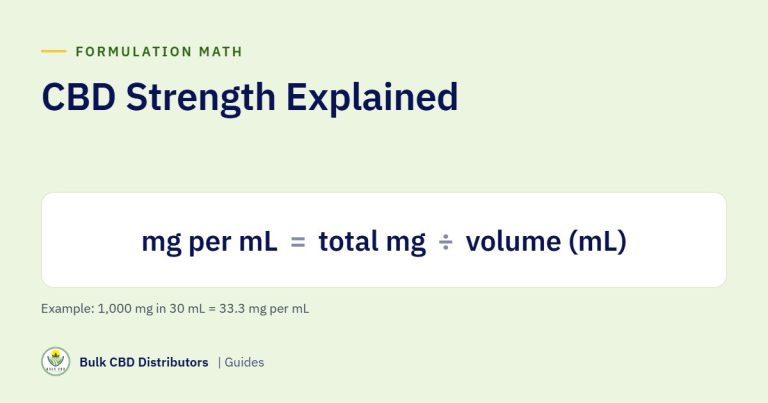
The CBD input changes the total slightly. A 30 mL MCT tincture made with 1 g of CBD isolate and about 29 mL of MCT weighs about 28.4 g. Our guide to calculating CBD strength shows how to move between mg per mL, mg per gram and mg per serving.
Sourcing the CBD side of the formula?
We supply CBD isolate, broad spectrum, full spectrum and crystal resistant CBD distillate for oil-based products, with the batch COA on every order. MOQs run 100g to 1kg depending on the product. Request a wholesale quote and tell us your carrier and strength.
How Well Does CBD Dissolve in Each Carrier?
CBD isolate and distillate dissolve readily in warm MCT, olive and hemp seed oil at typical tincture strengths. Gentle warmth, typically 40 to 60 C, speeds things up without darkening the oil. Two practical limits matter more than the carrier itself:
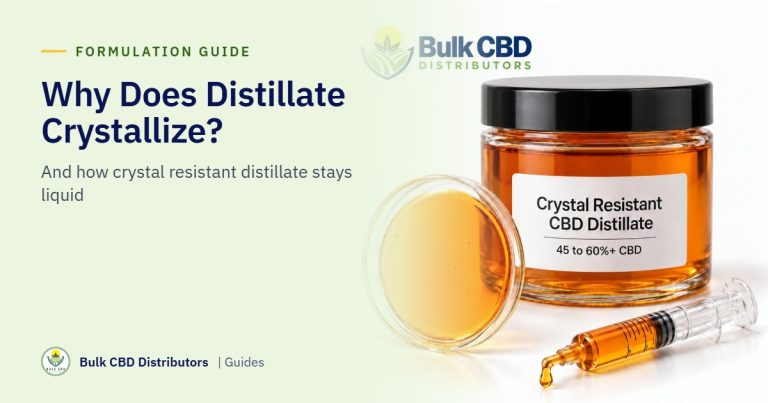
- High strengths. Isolate-based oils from about 1,500 mg per 30 mL, and especially above 3,000 mg, are more likely to cloud or crystallize when cold. A blend with distillate, or a crystal resistant input, keeps them clear.
- Solid carriers. In coconut oil and cocoa butter, CBD has to be mixed while the fat is melted and then cooled evenly, or it can concentrate in one part of a batch.
Does the Carrier Oil Change CBD Absorption?
CBD is fat soluble, and published research on oral CBD has found that taking it with a fat-containing meal raises the amount absorbed. Claims that one carrier oil is clearly better than another for absorption are not well supported, and they are not claims to put on a label. Choose the carrier for taste, stability, texture and format, and leave absorption language out of your marketing.
How to Choose and Test a CBD Carrier Oil
- Start from the product format. Write down the format, strength, flavor and shelf life you need. A tincture, a softgel, a chocolate and a balm each point to different carriers.
- Shortlist two or three carriers. Use the comparison table to pick carriers that fit the format: MCT for most tinctures and softgels, cocoa butter or coconut oil for edibles, jojoba or grapeseed for skin products.
- Check the supplier documents. Ask each carrier supplier for a specification sheet and certificate of analysis, including peroxide value and free fatty acids for oxidation, and the source of MCT oil.
- Make small test batches. Dissolve your CBD input at full strength in each carrier, using gentle warmth, and record how quickly and completely it dissolves.
- Hold samples cool and warm. Keep samples cool and at room temperature for one to two weeks and check for cloudiness, crystals, separation, color change and off odors.
- Taste or apply the samples. Have a small panel compare flavor for oral products, or feel and absorption on skin for topicals.
- Lock the spec and test the finished lot. Write the chosen carrier into your batch record with its lot number, then send the finished product to an ISO 17025-accredited third-party lab for potency and total THC.
Carrier Oil and Shelf Life
Most CBD oils go off because the carrier oxidizes, not because the CBD breaks down. Oxidized oil smells sharp or like paint, tastes bitter and darkens. To slow it down:
- Pick a stable carrier, or blend a stable one with a less stable one.
- Use amber or opaque packaging and keep bottles away from heat.
- Limit air in the bottle with a correct fill level.
- Ask carrier suppliers for fresh lots and their peroxide value, and check your CBD input's COA for potency before every run.
Labels and Section 781
List the carrier oil on the ingredient panel and keep its lot number in your batch record next to the CBD input COA. For products sold from December 11, 2026, Section 781 of P.L. 119-37 limits finished hemp consumer products to 0.4 mg of total THC per container. The carrier does not change that number, but the CBD input does, which is why isolate and non-detect broad spectrum are the simplest inputs. The Congressional Research Service summary covers the rule.
CBD Inputs from BCD
BCD has supplied the hemp industry since 2020, and our relationships with major hemp ingredient manufacturers, distributors and brands, some direct and some through partners, let us pick which lots we carry. Isolates and distillates are produced in cGMP-compliant facilities and tested by ISO 17025-accredited third-party labs.
Orders begin as requests, and you pay only after we confirm availability and price. Most ingredient orders ship the same or next day once paid, a few take up to 72 business hours, and everything ships in plain, unbranded boxes.
What This Means for Your Business
- Default to MCT for tinctures and softgels, and choose another carrier only when it adds something to the product or label.
- Plan shelf life around the carrier, since oxidation usually ends a product's life before CBD loss does.
- Use density for fill checks so weight-based filling matches the mg per mL on your label.
- Test at full strength in the real carrier before you commit to a run.
Frequently Asked Questions
What is the best carrier oil for CBD?
MCT oil is the most common choice because it is neutral, stable and stays liquid. Hemp seed, olive, avocado, coconut, grapeseed and jojoba oils suit particular formats and labels.
Is MCT oil the same as fractionated coconut oil?
They are very similar. Both are mostly caprylic (C8) and capric (C10) triglycerides. MCT oil can also be made from palm kernel oil, so ask the supplier for the source.
Is hemp seed oil a good carrier for CBD?
It works and suits an all-hemp label, but it is high in polyunsaturated fats, so it oxidizes faster and has a stronger flavor than MCT. Many brands blend it with MCT.
Can I use olive oil as a CBD carrier?
Yes. Olive oil dissolves CBD well and is common in softgels and culinary oils. It has a distinct taste and can cloud in the cold.
What carrier oil is best for CBD topicals?
Jojoba, grapeseed, avocado and fractionated coconut oil are common in skin oils, and coconut oil, shea butter and beeswax are used in balms.
What carrier is used for CBD drinks?
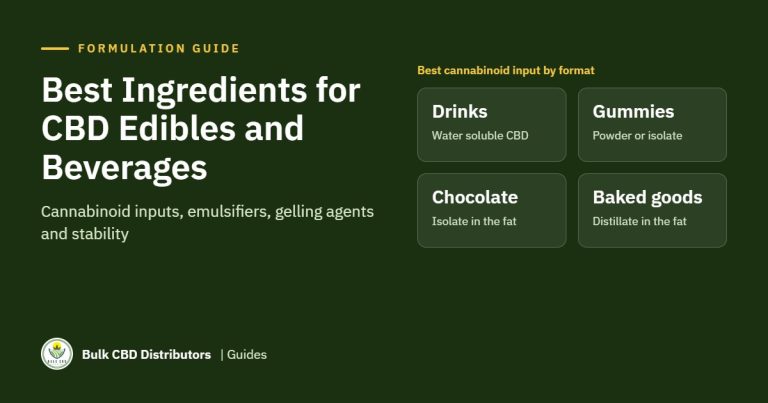
Drinks do not use a carrier oil. They use water soluble CBD, a powder or liquid emulsion that disperses in water. Our guide to the best ingredients for CBD edibles and beverages covers drink and edible formulation in more detail.
What is the density of CBD oil?
A CBD oil made with MCT is close to the density of MCT, about 0.94 to 0.95 g/mL near room temperature. A 30 mL bottle weighs a little over 28 g of oil.
Does the carrier oil change how much CBD is absorbed?
Research shows oral CBD absorption rises when it is taken with fat, but there is little evidence that one carrier oil is clearly better than another. Keep absorption claims off labels.
Why does my CBD oil smell rancid?
The carrier has oxidized. Choose a more stable carrier, use amber bottles, store away from heat and check the carrier's freshness before each run.
Does BCD sell carrier oils?
No. BCD supplies the CBD and minor cannabinoid ingredients. Carrier oils come from food and cosmetic ingredient suppliers.