Hemp oil and CBD oil are not the same product: hemp oil usually means hemp seed oil, pressed from seeds that contain almost no CBD, while CBD oil is made from a hemp extract such as CBD isolate or CBD distillate, measured into a carrier oil. For brands buying bulk CBD oil inputs, the difference shows up in one place that cannot be argued with: the cannabinoid panel on the certificate of analysis (COA). This guide on hemp oil vs CBD oil explains how each is made, why the two get mixed up, and how to make sure the oil you source is the one you are paying for.
| Spec | At a glance |
|---|---|
| Hemp seed oil | Pressed from seeds; trace or non-detect CBD |
| CBD oil | Hemp extract in a carrier; CBD measured in mg per bottle |
| How to tell them apart | The cannabinoid panel on the batch COA |
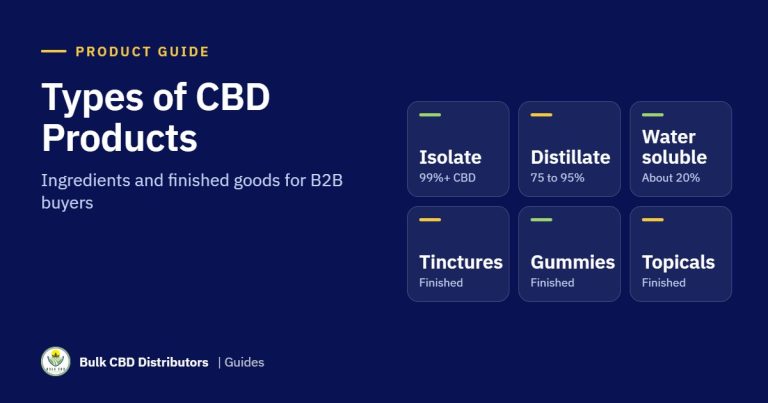
| Common CBD inputs | Isolate at 99%+; distillates at 45 to 95% CBD by grade |
What Is Hemp Oil?
In most product listings, "hemp oil" means hemp seed oil. It is cold pressed from the seeds of the hemp plant, much like sunflower or flax oil, and it is valued for its fatty acid profile in foods, skin care and cooking. The seeds themselves are not where the plant makes cannabinoids. According to the FDA's guidance on cannabis-derived products, hemp seeds do not naturally contain THC or CBD, and seed-derived ingredients carry only trace amounts picked up during harvest and processing. The FDA completed its review of hemp seed oil as a food ingredient in 2018, which is why it appears on grocery shelves.
So a bottle labeled "hemp oil" can be a perfectly good product. It is simply not a CBD product, and a COA for hemp seed oil will show CBD as non-detect or close to it.
What Is CBD Oil?
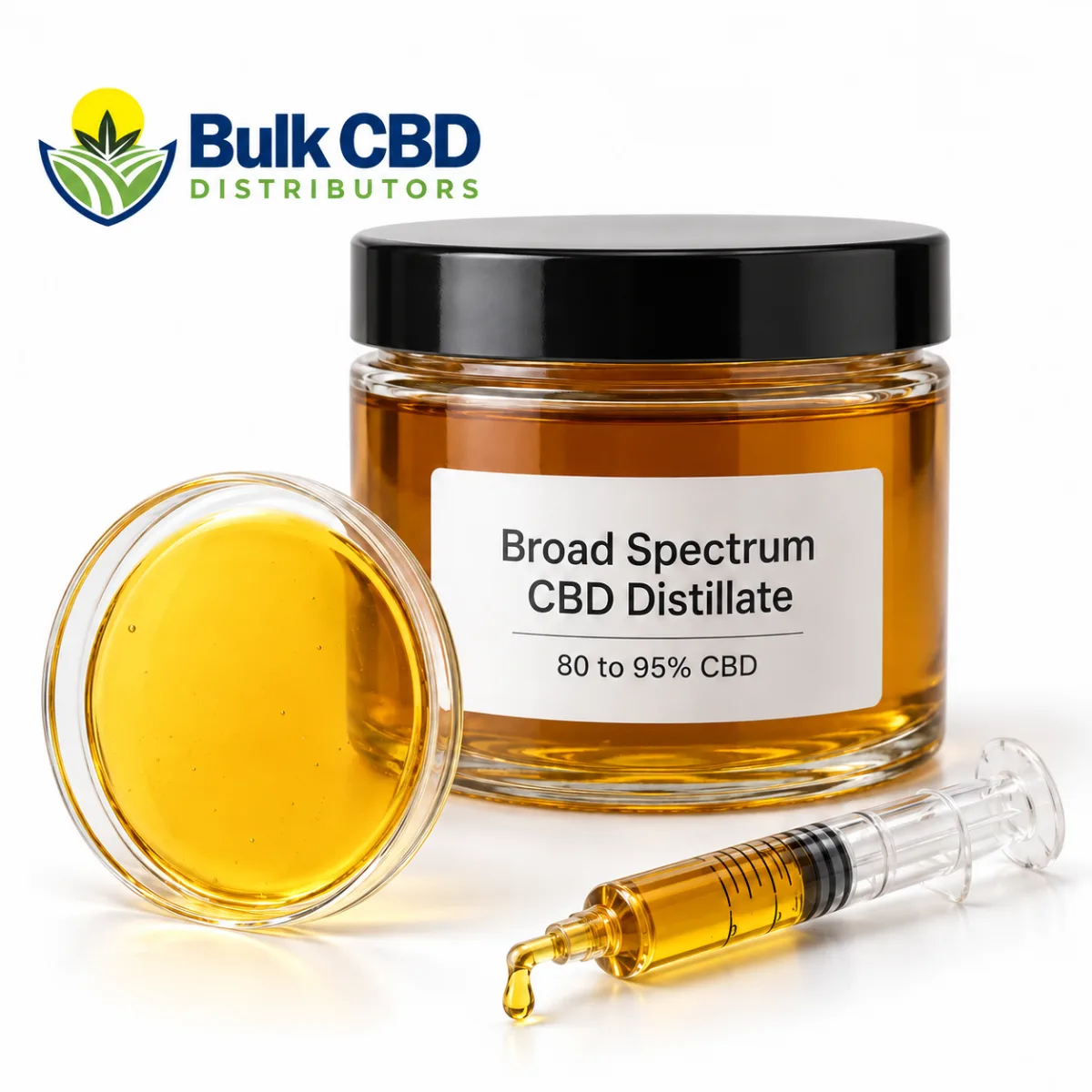
CBD oil is a finished or semi-finished oil that contains a measured amount of cannabidiol. Manufacturers make it by dissolving a CBD ingredient into a carrier oil such as MCT (fractionated coconut) oil, hemp seed oil or olive oil. The CBD itself comes from the flowers and leaves of the plant, where the cannabinoids are concentrated, and is extracted and refined into one of a few standard inputs:
- CBD isolate: a 99%+ pure crystalline powder, non-detect for Delta-9 THC.
- Broad spectrum CBD distillate: CBD with other minor cannabinoids and terpenes, with THC reduced through extra processing.
- Full spectrum CBD distillate: CBD with the plant's natural cannabinoid profile, including Delta-9 THC.
- Crystal resistant CBD distillate: a distillate processed to resist crystallizing in oils and cartridges.
When a buyer asks for bulk CBD oil, they are almost always asking for one of these concentrated inputs, not a ready-made bottle. The concentrate is what gets measured, priced and tested, and the carrier is added at the formulation stage.
Hemp Oil vs CBD Oil Side by Side
| Feature | Hemp seed oil | CBD oil |
|---|---|---|
| Plant part | Seeds | Flowers and leaves (extract) |
| CBD content | Trace or non-detect | Measured, from about 100 mg to several thousand mg per bottle |
| How it is made | Cold pressed from seeds | Extract refined to isolate or distillate, then mixed into a carrier |
| Main uses | Food, cooking, cosmetics, carrier oil | Tinctures, softgels, edibles, topicals, pet products |
| What the COA shows | Fatty acids; cannabinoids near zero | Cannabinoid panel with CBD in mg/g or percent |
| Typical bulk input | Hemp seed oil by the drum | CBD isolate or CBD distillate by the gram or kilo |
The table is the quick version of hemp oil vs CBD oil for buyers. The rest of this guide covers the practical parts: why the mix-up happens, what goes into CBD oil at the bulk level, and how to check it.
Why Do Hemp Oil and CBD Oil Get Confused?
Three things blur the line. First, both oils come from the same plant species, so "hemp" appears on both labels. Second, some marketplaces have restricted the word "CBD" in listings at various times, so sellers have used "hemp oil" or "hemp extract" as a stand-in, even for products that do contain CBD. Third, hemp seed oil is a common carrier for CBD, so a real CBD tincture can list hemp seed oil as its first ingredient.
The result is that the label alone does not tell a buyer much. A product called "hemp oil 5000" may contain no CBD at all, and a product called "hemp extract" may be a properly dosed CBD oil. For a brand building a product line, the only reliable reference is the cannabinoid amount on the COA, matched to the batch you receive.
What Goes Into Bulk CBD Oil?
At the ingredient level, CBD oil starts with a concentrate. Each one behaves differently in a formula and suits different label claims:
| Input | Typical potency | Best for |
|---|---|---|
| CBD isolate | 99%+ CBD, non-detect Delta-9 THC | THC-free tinctures, flavor-neutral oils, precise label amounts |
| Broad spectrum CBD distillate | 80 to 95% CBD with minor cannabinoids | Oils that keep minor cannabinoids, with a non-detect THC option |
| Full spectrum CBD distillate | 75 to 85%+ CBD, natural profile | Processors and brands that want the whole profile; Standard or Compliant versions |
| Crystal resistant CBD distillate | 45 to 60%+ CBD | Oils and cartridges where crystallization is a problem |
| CBD crude oil | 50 to 70% CBD, winterized | Further refining, not direct use in finished oils |
Most manufacturers choose between isolate and CBD distillate based on the label they want. Isolate gives a clean, measurable CBD number and no THC. Distillates carry minor cannabinoids and terpenes and a more natural color and taste. Our full spectrum vs broad spectrum vs isolate guide covers that choice in depth.
Ask for the COA before you compare oils
Every BCD ingredient ships with its batch COA, and representative COAs are open in our COA library. MOQs run 100g to 1kg depending on the product. Request a wholesale quote and tell us the oil you plan to make.
How Do You Tell Them Apart on a COA?
A COA is the lab report for a specific batch. For this question, only a few lines matter:
- The cannabinoid panel. CBD oil and CBD inputs show CBD as a clear number, in percent or mg/g. Hemp seed oil shows CBD as non-detect or a fraction of a milligram.
- Total THC. Look at Delta-9 THC and THCA together. Isolate and broad spectrum should be non-detect or very low. Full spectrum will show Delta-9.
- Units. Concentrates are reported in percent or mg/g. Finished oils are often reported in mg/mL, which you multiply by bottle volume to check the label.
- Batch and lab. The batch number on the COA should match your lot, and the lab should be an ISO 17025-accredited third-party lab.
If a supplier offers "hemp oil" for a CBD product and cannot show a cannabinoid panel with a real CBD number, treat it as hemp seed oil. Our guide to reading a hemp COA walks through every section of the report.
Is Hemp Seed Oil a Good Carrier for CBD?
It can be. Hemp seed oil is a natural partner for brands that want an all-hemp ingredient list, and it brings its own fatty acids and a nutty, green flavor. The trade-offs are shelf life and taste. Hemp seed oil is rich in polyunsaturated fats, so it oxidizes faster than MCT oil, and its flavor shows through in unflavored tinctures.
MCT oil is the most common carrier in bulk production because it is neutral in taste, stays liquid, resists oxidation and dissolves CBD isolate and distillate well. Some brands blend the two: MCT for stability, a share of hemp seed oil for the label. Whatever the carrier, the CBD amount on your label comes from the concentrate, not the carrier.
Labeling and Compliance for Hemp and CBD Oils
Finished CBD oils have to match their labels, and buyers increasingly check. Under Section 781 of P.L. 119-37, finished hemp consumer products are limited to 0.4 mg of total THC per container from December 11, 2026. A later law, P.L. 119-103, moved that date back from November 12; only the exclusion of synthetic cannabinoids still starts November 12, 2026. The Congressional Research Service summary covers the change in detail. That cap applies to the finished product on the shelf, not to bulk ingredients, but it shapes which inputs make sense for a CBD oil sold after December 11: isolate and non-detect broad spectrum are the simplest route to a compliant bottle.
Hemp seed oil sold as a food oil is a separate category with its own rules, and it should never be marketed as containing CBD it does not have. For a deeper look at the law, read our 2026 hemp law guide.
How Bulk CBD Distributors Supplies CBD Oil Inputs
BCD has been in the hemp industry since 2020 and supplies CBD isolate, broad, full spectrum and crystal resistant distillates, water soluble CBD and crude to manufacturers and brands. We work directly or indirectly with major hemp ingredient manufacturers, distributors and brands, which lets us pick the batches we resell. Every lot is third-party tested in ISO 17025-accredited labs, and its COA ships with the order.
Orders work as requests: we confirm stock and your total first, and payment comes after that confirmation. Most ingredient orders ship the same or next day once paid, some take up to 72 business hours. Ingredients are blind shipped, with no brand labeling on the packaging, so you can order confidently for your company or even directly to your clients, knowing that we also value discretion and privacy.
What This Means for Your Business
- Specify CBD by the number, not the name. Write the CBD amount per bottle or per gram into your purchase order, and check it against the COA.
- Use hemp seed oil on purpose. It is a carrier with its own benefits for your label, not a source of CBD.
- Pick the concentrate that fits your claim. Isolate for THC-free and precise amounts, broad spectrum for minor cannabinoids without THC, full spectrum for the whole profile where it fits your market.
- Plan for December 2026. If your oil will sell after December 11, 2026, build the total THC cap into your formula now.
Frequently Asked Questions
Is hemp oil the same as CBD oil?
No. Hemp oil usually means hemp seed oil, which is pressed from seeds and contains only trace CBD. CBD oil is made from an extract of the plant's flowers and leaves and contains a measured amount of CBD.
Does hemp seed oil contain CBD?
Only in trace amounts. The FDA notes that hemp seeds do not naturally contain CBD or THC, and seed-derived ingredients carry only small amounts picked up during harvest and processing.
Why do some CBD products say hemp oil or hemp extract?
Some sellers avoid the word CBD on certain marketplaces, so they use hemp oil or hemp extract instead. The only reliable check is the cannabinoid panel on the batch COA.
What is bulk CBD oil made from?
Bulk CBD oil starts with a concentrate: CBD isolate, broad spectrum distillate, full spectrum distillate or crystal resistant distillate. The concentrate is dissolved into a carrier oil at the formulation stage.
Which carrier oil is best for CBD oil?
MCT oil is the most common because it is neutral in taste, stable and dissolves CBD well. Hemp seed oil works too and suits an all-hemp label, but it oxidizes faster and has a stronger flavor.
How can I check the CBD content of an oil before buying?
Ask for the batch COA from an ISO 17025-accredited third-party lab. Look for CBD in percent, mg/g or mg/mL, and confirm the batch number matches your lot.
Is hemp seed oil legal?
Hemp seed oil is sold as a food and cosmetic oil, and the FDA has reviewed it as a food ingredient. It is regulated separately from CBD products.
Does Section 781 affect CBD oil?
Yes for finished products. From December 11, 2026, finished hemp consumer products are limited to 0.4 mg total THC per container. Bulk ingredients are a separate stage, but the cap shapes which inputs you choose.
Can I make CBD oil with hemp seed oil and CBD isolate?
Yes. Many brands dissolve CBD isolate or distillate into hemp seed oil, or into a blend of hemp seed oil and MCT oil. The CBD on the label comes from the isolate or distillate.
What is the minimum order for CBD oil ingredients from BCD?
Minimums run 100g to 1kg depending on the product, and sizes go up to 100kg on most ingredients. Larger volumes are quoted on request.