White label vs private label comes down to who owns the formula: white label CBD is an existing product sold under your brand, while private label CBD is made to your own specification and is yours alone. White label is faster and usually has lower minimums. Private label takes longer and costs more to start, but it gives you a product competitors cannot buy. Many brands start with white label CBD, learn what sells, and then move their best sellers to private label.
| Spec | At a glance |
|---|---|
| Formula | White label: existing and shared. Private label: made to your spec |
| Speed to market | White label is fastest; private label adds development |
| Minimums | Quoted per project; private label usually higher |
| Best for | White label: test launches. Private label: signature products |
What Is the Difference Between White Label and Private Label?
The two terms are often used as if they mean the same thing, and some suppliers use them interchangeably. In practice, the line is drawn at the formula.
- White label: the manufacturer already makes the product. Several brands may sell the same formula, each under its own label. You control the brand, the price and where it sells.
- Private label: the manufacturer makes a product to your recipe or specification, often exclusively for you. You control the formula as well as the brand.
A third route sits beside both: buying bulk ingredients and making the product yourself, in your own facility or with a co-packer. That route gives full control and the lowest ingredient cost per unit, but it requires production capacity and compliance work.
White Label vs Private Label CBD Compared
| Feature | White label | Private label | Bulk ingredients |
|---|---|---|---|
| Formula | Existing, shared | Yours, made to spec | Yours, made in-house |
| Speed to market | Fastest | Moderate to slow | Depends on your production |
| Minimums | Quoted per project, often lowest | Quoted per project, usually higher | 100g to 1kg depending on the product |
| Upfront work | Branding and labels | Formulation, testing, branding | Formulation, production, testing |
| Differentiation | Brand and marketing | Product and brand | Full control |
| Best for | New brands, retailers, test launches | Established brands, signature products | Manufacturers and formulators |
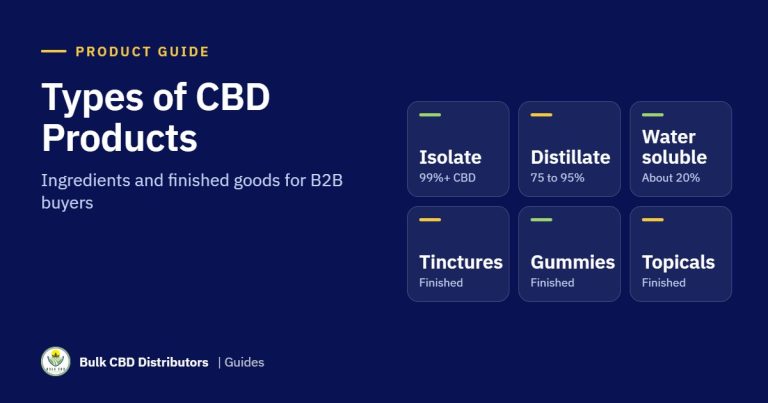
Our white label and private label program covers the first two columns, and the bulk ingredient route runs through our CBD isolates, distillates and water soluble ingredients.
How Does White Label CBD Work?
A white label order starts from a catalog of existing formats: tinctures and oils, gummies and edibles, topicals, and beverages. You choose the format, cannabinoid and strength from the options available, provide your label artwork, and the product is produced and labeled for your brand.
The advantages are speed and low risk. There is no formulation stage, the product already has a test history, and minimums are usually lower than a custom run. The trade-off is that the product is not exclusive. Another brand may sell an identical tincture, so your edge comes from branding, pricing, channel and customer service.
White label works well for a retailer adding a house brand, a wellness business adding a CBD line, or a new brand testing which formats sell before investing in a custom formula.
How Does Private Label CBD Work?
Private label adds a development stage. You and the manufacturer agree on the cannabinoid profile, strength per serving, flavor, carrier, packaging and label claims. The manufacturer develops prototype batches for your approval, then runs a pilot and a full production batch.
The advantage is a product that is yours. You can build a signature blend, such as CBD with CBG or CBN, at a strength or flavor no one else offers, and you can change suppliers later without losing the recipe if your agreement says the formula belongs to you. The trade-offs are time, higher minimums and more decisions. Expect a longer schedule, especially for new formulas, and budget for testing at each stage.
Run the numbers before you request quotes
Our white label margin calculator checks unit cost, margin, MSRP and break-even for a branded run. When you are ready, send your formats and volumes through our private and white labeling page for a quote.
What Do White Label and Private Label CBD Cost?
Pricing for both is quoted per project, because a few variables move the unit cost more than anything else:
- Cannabinoid and strength. CBD is the least expensive cannabinoid; CBG, CBN, CBC and CBDV cost more per milligram, and a higher strength per bottle or piece raises the ingredient cost.
- Format. Tinctures are usually the simplest; gummies, drinks and topicals add ingredients, packaging and process steps.
- Order size. Unit cost falls as volume rises, because setup, testing and labeling are spread over more units.
- Packaging. Custom bottles, boxes and printed components add cost and lead time compared with stock packaging.
- Testing and documentation. Each batch needs a COA. Private label development adds prototype rounds and stability checks.
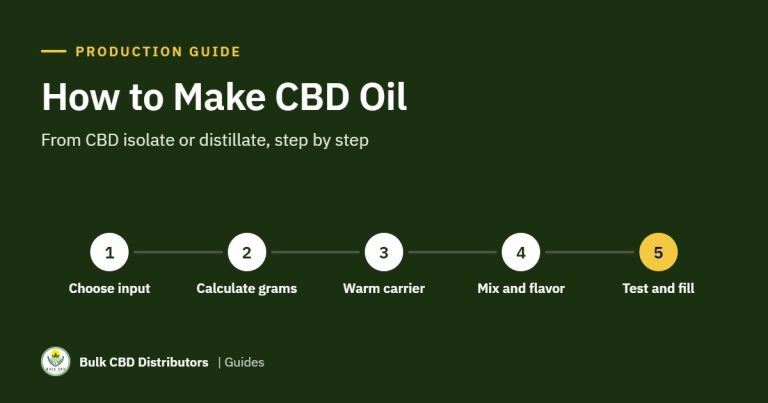
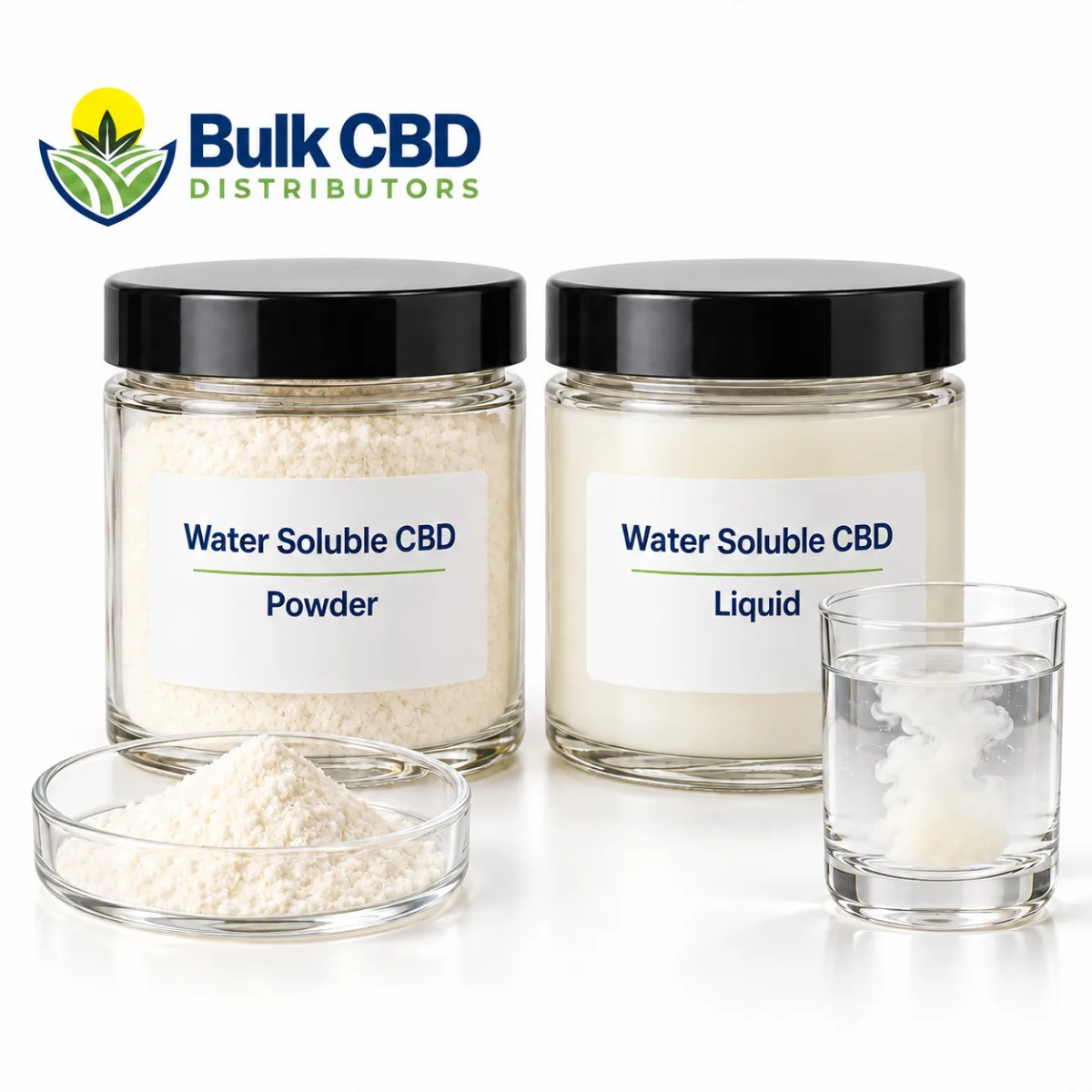
If you plan to make products yourself instead, the ingredient side is easier to price. CBD oil wholesale buyers usually work from CBD distillate or CBD isolate, and drink and gummy makers use water soluble CBD. Our guide on what drives CBD isolate cost explains the main price levers.
How to Choose Between White Label and Private Label
Most brands can settle the question with six steps:
- Define the product line. List the formats you want to launch first, such as tinctures, gummies, topicals or drinks, and the cannabinoids and strengths for each.
- Decide how much the formula matters. If an existing formula meets your needs, white label is faster. If the formula itself is your selling point, plan for private label.
- Estimate volumes and budget. Set first-order units per product and your expected reorders. Run unit cost, margin and break-even before you request quotes.
- Prepare brand and label assets. Have your logo, artwork and label copy ready, and plan label claims around what the COA can support.
- Request quotes and compare like for like. Ask each supplier for minimums, unit cost, schedule, testing and who owns the formula, then compare on the same basis.
- Confirm documentation before production. Agree on the COA for each batch, label review and the production schedule before the run is booked.
If you are still unsure, a common path is to launch one or two white label products, watch what sells for two or three months, and then develop a private label version of the winner.
Labels, COAs and Section 781
Whichever model you choose, your brand is the name on the bottle, so label accuracy is your responsibility in the market. Ask for the COA behind every batch and make sure the cannabinoid amounts on your label can be checked against it. Retailers and marketplaces increasingly ask to see it.
Plan for Section 781 of P.L. 119-37, which limits finished hemp consumer products to 0.4 mg total THC per container from December 11, 2026. The Congressional Research Service summary explains the rule. The cap applies to every cannabinoid, so products built on isolates or non-detect distillates, whether CBD, CBG, CBN, CBC or CBDV, are the easiest to keep inside it. Avoid medical claims on labels and marketing; describe ingredients and amounts, not health outcomes.
Questions to Ask Any White Label or Private Label Supplier
- Who owns the formula, and can I take it to another manufacturer later?
- What are the minimums per product, per flavor and per label?
- What is the schedule from approved artwork to finished goods?
- Is every batch tested by an ISO 17025-accredited third-party lab, and will I get the COA?
- What strengths, cannabinoids and packaging are available as standard?
- How are reorders priced and scheduled?
For a side-by-side view of manufacturers, see our comparison of white label CBD companies.
How BCD Supports Both Models
BCD has supplied the hemp industry since 2020. We offer white label and private label CBD products in tinctures, gummies and edibles, topicals and beverages, with CBD, CBG, CBN, CBC and CBDV, plus the bulk ingredients behind them. White label and private label runs are scheduled per project and do not ship same or next day; we confirm the schedule in your quote. Bulk ingredient orders are different: most ship the same or next day once payment is made.
Nothing is charged when you submit a request. Payment follows once we confirm availability, the schedule and the final total.
What This Means for Your Business
- Choose white label to launch fast and learn what your customers buy before you invest in a formula.
- Choose private label when the product is the brand, and get formula ownership in writing.
- Choose bulk ingredients if you have production capacity and want the lowest cost per unit and full control.
- Build Section 781 into every plan for products that will sell after December 11, 2026.
Frequently Asked Questions
What is white label CBD?
White label CBD is an existing, ready-made product, such as a tincture or gummy, sold under your brand and label. The formula already exists, so you skip development and launch faster.
What is private label CBD?
Private label CBD is made to your specification. You choose the cannabinoid blend, strength, flavor, format and packaging, and the product is usually exclusive to your brand.
Is white label or private label better?
White label is better for speed and lower minimums. Private label is better when a unique formula is central to your brand. Many brands start with white label and move best sellers to private label.
Which costs more, white label or private label?
Private label usually costs more to start because of formulation, prototype rounds, testing and higher minimums. White label spreads development cost across many brands, so entry costs are lower.
Who owns the formula in private label CBD?
It depends on the agreement. Ask in writing whether the formula belongs to you and whether you can move it to another manufacturer.
What products can be white labeled?
Common white label CBD formats include oils and tinctures, gummies and edibles, topicals, and beverages made with water soluble cannabinoids.
How long does a white label CBD order take?
Runs are scheduled per project. White label is faster than private label because there is no formulation stage; your supplier should confirm the schedule in the quote.
Can I white label CBG, CBN or CBC products?
Yes. Many white label lines use CBD with CBG, CBN, CBC or CBDV, alone or blended. The total THC limit that starts December 11, 2026 applies to all of them, so isolates and non-detect distillates are the simplest inputs.
Do white label CBD products come with COAs?
They should. Ask for a COA from an ISO 17025-accredited third-party lab for every batch so your label can be checked against it.
Can I make my own products instead of white labeling?
Yes. Buying bulk CBD isolate, distillate or water soluble CBD and formulating in-house gives full control and the lowest unit cost, if you have production capacity.