CBD isolate price per kg is set by a short list of cost drivers: the cost and quality of the hemp feedstock, the purity grade, the particle form, the depth of testing behind each lot, the volume you commit to, and where the market sits in its supply cycle. Two quotes that look far apart are often priced on different specs, so the useful comparison is cost per gram of verified CBD, not the headline number per kilogram. This guide explains each driver and how to plan a bulk order so the price you are quoted is the price you actually pay.
This guide does not list prices because isolate pricing moves with the market and with lot specs. Current grades and the representative COA are on the CBD isolate page. For the basics of what isolate is and how it is used, see What Is CBD Isolate? The Complete B2B Manufacturer's Guide.
What Determines CBD Isolate Price per Kg?
Isolate is a commodity in the sense that the target molecule is the same everywhere: cannabidiol at 99% or higher purity. What is not a commodity is everything around that molecule. The figure below groups the cost levers into two sets: those fixed by how the material was made, and those you control through how you buy.
| Cost driver | Pushes price up | Pushes price down | What to ask the supplier |
|---|---|---|---|
| Feedstock | Low-potency or tight biomass supply | Strong harvest, high-potency biomass | Was the biomass tested before extraction? |
| Purity grade | 99.5% and above, non-detect solvents | Standard 99.0 to 99.5% | What does the batch COA show, not the spec sheet? |
| Particle form | Milled to tight size range, water-soluble conversion | Unmilled crystal | Is it milled, and to what size range? |
| Testing | Full panel on every lot | Potency-only or old COAs | Does the batch COA ship with the order? |
| Volume | Small trial quantities | Multi-kilogram commitments | Where are the tier breaks? |
| Market cycle | Supply shortfalls, regulatory uncertainty | Post-harvest inventory surplus | How long is this quote valid? |
How Do Feedstock and Processing Flow Into Isolate Pricing?
Isolate is the end of a long refinement chain, so upstream costs compound. Hemp biomass is extracted into crude oil at roughly 50 to 70% cannabinoids, refined into distillate, then crystallized, washed, dried and milled to 99% or higher. Every step loses some material and adds labor, solvent, energy and equipment time. For a step-by-step view of that chain, see How CBD Isolate Is Made.
Biomass cost and potency
Biomass is bought by weight, but what a processor really pays for is cannabinoid content. Higher-potency biomass yields more crude per ton, which spreads fixed processing cost over more kilograms of finished isolate. When a harvest is weak or potency runs low, processors need more biomass for the same output, and isolate prices tend to follow.
Contaminant risk
Pesticides and heavy metals in biomass can concentrate during refinement. Processors who test incoming biomass and reject failing lots carry higher input costs than those who do not, but they also produce isolate that passes full-panel testing. A low quote can reflect a processor who skipped that screen.
Processing yield
Crystallization does not capture every milligram of CBD on the first pass. Material left in the mother liquor is often recrystallized or redirected into broad-spectrum products. Efficient operators recover more of it, which keeps their cost per kilogram of isolate lower without cutting quality.
Purity Grade, Particle Form and Testing
Purity grade
Isolate is generally sold in two tiers. Standard grade assays at 99.0 to 99.5% CBD and covers most tinctures, gummies, capsules and topicals. Premium grade assays at 99.5 to 99.9% and is typically specified for export, pharmaceutical-adjacent work, or brands that need tighter documentation. Premium lots usually also target non-detect residual solvents and moisture below 0.2%, compared with below 0.5% for standard grade. Reaching those numbers takes extra washing, sometimes a second crystallization, and lower yield, which is why premium grade costs more per kilogram.
The practical question is whether your product needs that last half percent. For most finished goods the difference in delivered CBD is small: 1 kg at 99.0% holds 990 g of CBD, while 1 kg at 99.5% holds 995 g, a difference of 5 g. If your regulatory or customer documentation does not require premium grade, standard grade is usually the better value.
Particle form
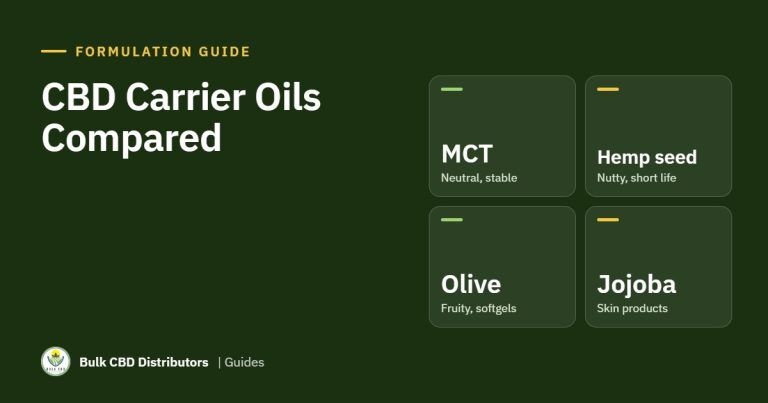
Crystals straight from crystallization cost the least to produce. Milling and sieving to a consistent particle size, with the median (d50) set by the supplier's mill, adds a step but makes the powder dissolve faster in carrier oils and blend evenly in dry mixes. If you need isolate for beverages or other water-based products, conversion to water-soluble CBD is a separate, higher-cost product because of the emulsification process and the carriers involved.
Testing
A full panel from an ISO 17025-accredited, DEA-registered third-party laboratory covers potency, total THC (Delta-9, Delta-8 and THCA), residual solvents, heavy metals, pesticides and microbials. That testing is a real cost on every lot. Suppliers who quote noticeably below market sometimes do so by relying on old or partial COAs. Ask whether listed COAs are representative and whether the batch COA ships with the order, so the document matches the material you receive.
How Do Volume Tiers and Market Cycles Change Your Price?
Volume tiers
Almost every isolate supplier prices in tiers. Small trial quantities carry the highest per-kilogram price because packaging, testing documentation, handling and shipping are spread over very little material. As order size steps up to multiple kilograms, those fixed costs shrink per unit and the price per kilogram falls. Ask where each tier break sits. Sometimes moving from just below a break to just above it costs little more in total and lowers your unit cost on the whole order.
Larger volumes also change packaging. Isolate commonly ships in sealed 1 kg units, in 5 to 10 kg lined bags or fiber drums, and in bulk drums at 25 kg and above. Bigger units can lower packaging cost per kilogram, but only make sense if you can use or reseal the material quickly.
Market cycles
Hemp is an agricultural crop, so isolate supply follows harvest timing and planting decisions. After a large harvest, inventory builds and prices tend to soften. When acreage drops or a harvest underperforms, supply tightens and prices rise. Regulation also moves the market. The federal hemp definition is changing under Section 781 of P.L. 119-37 (see the Congressional Research Service summary), and periods of regulatory uncertainty can shift both supply and demand. CBD is affected the same way as other hemp cannabinoids: total THC (THCA counts) and the 0.4 mg total THC per container cap on finished products take effect December 11, 2026, so buyers should confirm compliance documentation for every lot.
Because of these cycles, quotes carry a validity window. Confirm how long a quote holds before you plan production around it.
How Should You Compare Isolate Quotes?
The single most useful habit is converting every quote to cost per gram of CBD, using the purity shown on the batch COA:
Cost per gram of CBD = price per kg / (COA purity x 1,000)
A quote at a slightly higher price per kilogram can be the better buy if the lot assays higher, ships with full testing, and arrives in a form you can use without extra processing. Then add the costs a headline price can hide:
- Shipping and packaging for your order size.
- In-house testing if the supplier's COA is partial or not lot-matched.
- Processing time if crystals need milling or sieving at your facility.
- Loss from clumping if packaging lets moisture in. Keep packaging sealed and dry; damaged packaging can expose isolate to moisture and contamination.
- Reformulation risk if potency varies between lots.
For a broader framework on vetting suppliers, read How to Find and Vet a Legitimate B2B Supplier.
Planning a Bulk Order: MOQ, Trial Orders, Lead Time and Storage
Minimum order quantity
Bulk isolate is usually sold from 100g to 1kg upward, depending on the supplier and product. A low minimum makes it practical to run a pilot batch on the exact lot you plan to scale with, rather than committing to a large volume on spec alone.
Trial orders
Use a small first order to confirm three things: that the material dissolves and blends as expected in your process, that your own lab results agree with the supplier COA, and that the form and particle size fit your equipment. Many bulk suppliers do not offer free samples, so the smallest listed size becomes your trial order. Ask which lot it ships from.
Lead time and ordering
Lead times vary by supplier and by whether the lot is in stock. Ask how orders are confirmed and paid for, and whether lot details are confirmed before payment. Build a buffer into your production calendar for transit and incoming inspection.
Storage
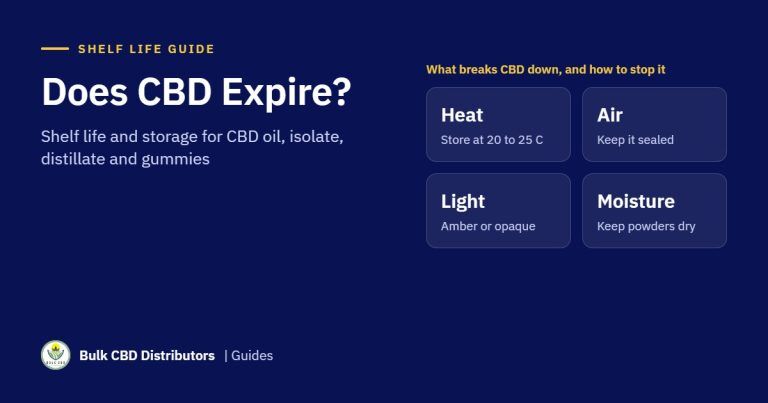
Plan volume around how fast you will use it. Properly stored isolate in its original sealed container is typically stable for 18 to 24 months from production. Keep it below 25 degrees Celsius, away from light and moisture, and reseal opened containers promptly. Buying more than you can use within that window turns a volume discount into a write-off.
What This Means for Your Business
Isolate pricing rewards buyers who know exactly what they need. Specify the purity grade your product and documentation actually require, choose the form that fits your equipment, and insist on a batch COA from an accredited third-party lab. Then compare suppliers on cost per gram of verified CBD, adding shipping, testing and handling costs. Size orders to your usage and shelf-life window, use tier breaks where they make sense, and watch harvest and regulatory cycles when timing larger purchases. Doing this consistently lowers your true ingredient cost more reliably than chasing the lowest headline price. The isolates collection lists current grades and cannabinoids side by side.
Comparing CBD Isolate Quotes?
Current grades, specs and the representative COA are on the CBD isolate page. If you share the grade, form and volume you need, we are happy to quote against current lots and include the batch COA for your order.
Frequently Asked Questions
What is the price of CBD isolate per kg right now?
It changes with harvest supply, regulation and lot specs, so any published number dates quickly. Ask for a quote that names the grade, form, volume and lot, so you get current pricing you can compare like for like.
Why do CBD isolate quotes vary so much between suppliers?
Quotes often reflect different specs: purity grade, milled versus unmilled form, full-panel versus partial testing, and whether the COA matches the lot shipped. Convert each quote to cost per gram of CBD and compare documentation before comparing price.
Is premium grade CBD isolate worth the extra cost?
Only if your product or customers require it. Premium grade (99.5% and above) is typically used for export, pharmaceutical-adjacent work or strict documentation needs. For most finished products, standard grade at 99.0 to 99.5% delivers nearly the same CBD per kilogram.
How do I calculate cost per gram of CBD from a per-kilogram quote?
Divide the price per kilogram by the COA purity times 1,000. For example, at 99.0% purity one kilogram holds 990 grams of CBD, so you divide the kilogram price by 990.
What is the minimum order for CBD isolate at BCD?
MOQs are 100g to 1kg depending on the product. BCD does not offer free samples, so the smallest listed size works as a trial order.
Do volume discounts apply to CBD isolate?
Yes. Pricing is tiered, and the cost per kilogram falls as order size increases because fixed costs for testing, packaging and handling are spread over more material. Ask where the tier breaks fall.
How long do bulk isolate orders take to arrive?
Lead times vary by supplier and by whether the lot is in stock. Confirm the ship date, then allow time for transit and incoming inspection before you schedule production.
Should I run a trial order before committing to bulk?
Yes. A first order in the 100g to 1kg range lets you check solubility, blending and your own lab results against the supplier COA. Ask which lot your order ships from.
How much CBD isolate should I buy at one time?
Buy what you can use within the shelf-life window. Sealed isolate is typically stable for 18 to 24 months from production when stored cool, dry and away from light, so size orders to your production plan.
Should the COA match the isolate lot I receive?
Yes. Listed COAs are often representative, so ask for the batch COA for your specific lot and keep it with your purchase records.