To make a CBD salve, melt a base of carrier oils, butters and beeswax, let it cool slightly, stir in CBD isolate or distillate already dissolved in a little oil, then pour and let it set; creams and lotions need a water phase, an emulsifier and a preservative as well. CBD isolate is the most common input for skincare because it is white, odorless and easy to measure. This guide on CBD skincare formulation covers how to make CBD salve and balm, how creams and gels differ, which CBD input suits each format, how to test stability, and how to keep labels on the cosmetic side of the line.
| Spec | At a glance |
|---|---|
| Easiest format | Anhydrous salve or balm (oils, butters, wax) |
| Most common input | CBD isolate, 99%+ CBD |
| Water-based formats | Creams, lotions and gels; need emulsifier and preservative |
| Label framing | Cosmetic claims only: appearance, feel, moisture |
CBD Skincare Formats Compared
| Format | Base | Needs preservative | Best CBD input | Difficulty |
|---|---|---|---|---|
| Salve or balm | Oils, butters, beeswax or plant wax | Usually no (no water); add an antioxidant | Isolate or distillate | Low |
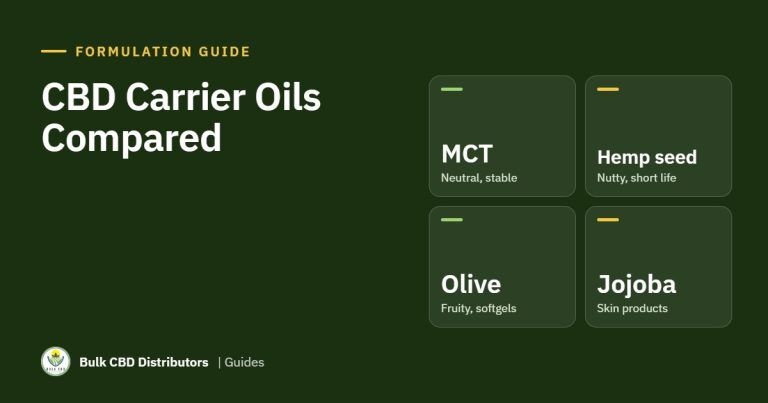
| Body or face oil | Carrier oils such as jojoba, squalane, grapeseed | Usually no; add an antioxidant | Isolate or broad spectrum | Low |
| Cream or lotion | Oil and water emulsion | Yes | Isolate in the oil phase | High |
| Gel or mist | Water with a gelling agent | Yes | Water soluble CBD | Medium |
| Stick or roll-on | Wax-rich base or light oil | Usually no | Isolate or crystal resistant distillate | Medium |
Anhydrous products, those made without water, are the simplest place to start. Once water is involved, microbial growth becomes the main risk and the formula needs a tested preservative system, which is why many brands bring in a cosmetic chemist or a contract manufacturer for creams and lotions.
Which CBD Input Works Best in Skincare?
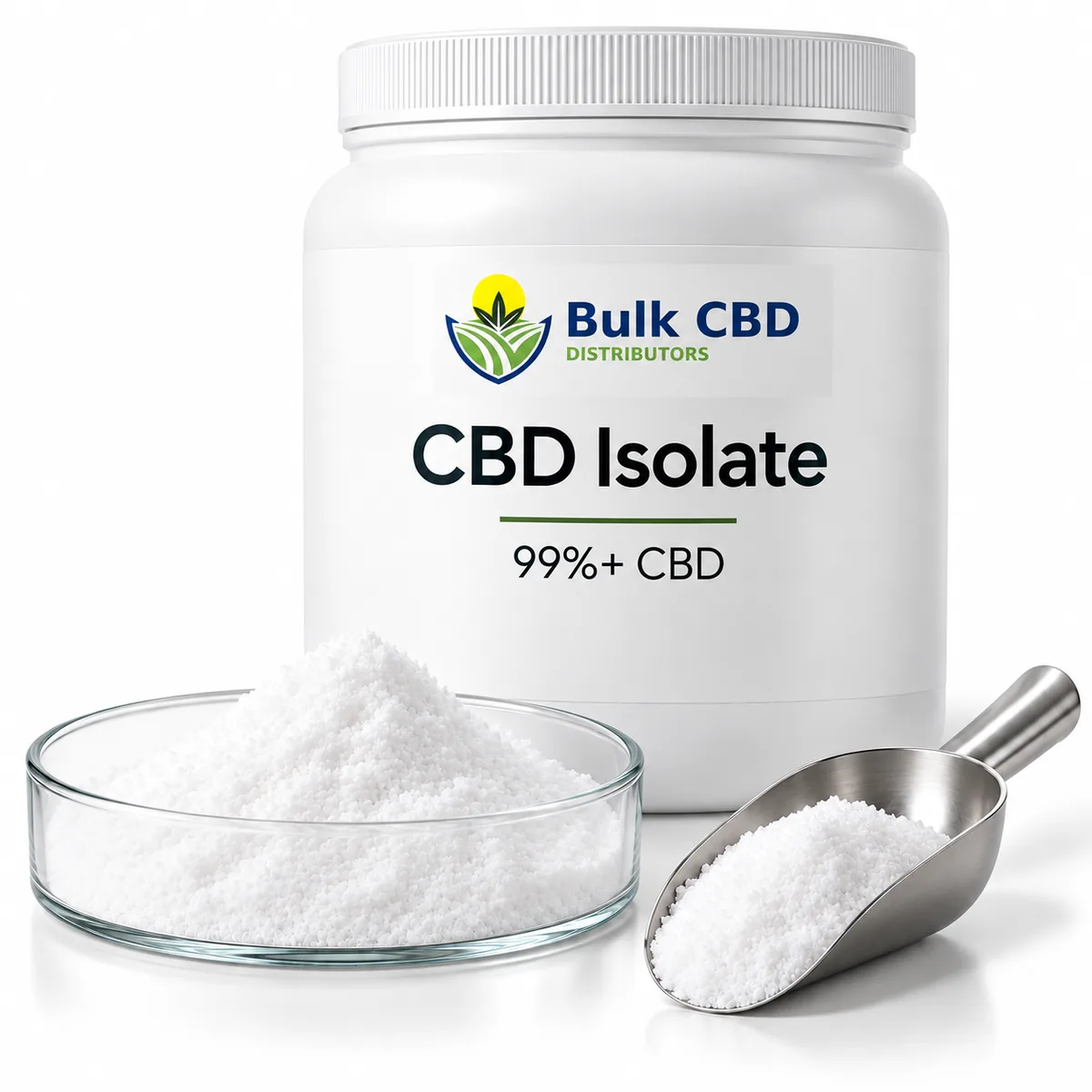
- CBD isolate (99%+). White, odorless and precise. It dissolves in warm oils and suits salves, oils and the oil phase of creams. At very high strengths it can recrystallize and feel gritty.
- Broad spectrum CBD distillate (80 to 95%). Adds minor cannabinoids such as CBG and CBC. It tints products amber and carries a mild hemp scent, which some brands want and others mask.
- Crystal resistant CBD distillate (45 to 60%+). Stays liquid, which helps high-strength balms and sticks stay smooth.
- Water soluble CBD (about 20% or 10%). Disperses in water, so it goes into gels, mists and the water phase of lotions.
Some brands add CBG or CBC alongside CBD to build a distinct ingredient story. Describe them as ingredients, not as having effects on the skin. Our CBG guide covers that cannabinoid in more depth.
How to Make CBD Salve, Step by Step
This is the standard anhydrous method. It works the same for a 100 g bench batch and a production kettle.
- Set the batch size and strength. Choose the jar size and CBD per jar, then scale to a batch. Example: 100 g of salve at 1,000 mg CBD per 100 g.
- Weigh the base. Weigh the carrier oils, butters and wax. A soft salve is often about 75% oils and butters and 20 to 25% beeswax or a plant wax; more wax gives a firmer balm.
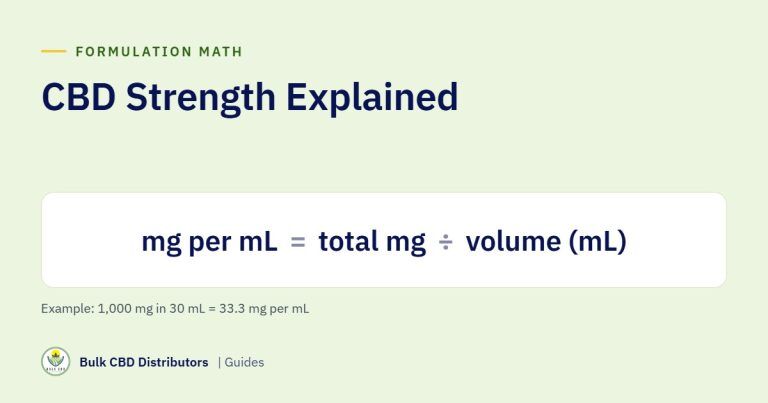
- Weigh the CBD input from the COA. Divide the target mg by input potency x 1,000. For 1,000 mg with 99% CBD isolate, that is about 1.01 g.
- Melt the base gently. Melt the oils, butters and wax together in a water bath or jacketed kettle until fully liquid. Beeswax melts at about 62 to 64 C, so the base needs to run a little above that.
- Dissolve the CBD in part of the oil. Warm a small portion of the carrier oil and stir the CBD input into it until fully dissolved, then add it to the melted base while the base is still fully liquid, typically around 60 to 65 C.
- Add antioxidant and scent. Stir in vitamin E or another antioxidant, typically 0.5 to 1%, and any fragrance or essential oils within their usage limits.
- Pour and set. Pour into tins or jars while fully liquid and let them cool undisturbed at room temperature, then cap.
- Test, label and record. Send a sample of the finished batch to an ISO 17025-accredited third-party lab for CBD and total THC, label with the tested amount and INCI ingredient list, and keep the input COA with the batch record.
Base Ratios for Salves, Balms and Sticks
| Product | Oils and butters | Wax | Texture |
|---|---|---|---|
| Soft salve | About 75 to 80% | About 20 to 25% | Soft, melts on contact |
| Firm balm | About 65 to 75% | About 25 to 35% | Firm in the tin, glides when warm |
| Stick | About 50 to 60% | About 40 to 50% | Holds its shape in a tube |
Butters such as shea and cocoa add body and slip; harder butters firm the product. Plant waxes such as candelilla are stronger than beeswax, so use less of them for the same firmness. Adjust in small steps and record every change in the batch record.
Planning a skincare line?
Buy CBD isolate or distillate to make your own, or launch faster with our white label CBD topicals program. Ingredient MOQs run 100g to 1kg depending on the product. Request a wholesale quote with your formats and strengths.
How CBD Creams and Lotions Differ
A cream is an emulsion of oil and water held together by an emulsifier. The usual method heats the oil phase and the water phase separately to around 70 to 75 C, combines them with mixing or homogenizing, and cools the batch while stirring. CBD isolate or distillate goes into the oil phase; water soluble CBD goes into the water phase or is added during cool-down. Heat-sensitive additives and the preservative are added below about 40 C, following the preservative supplier's directions, and the pH is checked at the end.
Every water-containing product needs a preservative system matched to its pH and ingredients, and that system should be confirmed with a preservative efficacy (challenge) test. Skipping this step is the most common reason small-batch creams spoil on the shelf.
Strength and Input Math
Topical strengths are usually stated as mg per container, and labs report mg per gram. A 60 g jar with 500 mg of CBD is about 8.3 mg/g, or 0.83%. The input weight follows the same formula as any other product: mg needed / (potency x 1,000). That jar needs about 0.51 g of 99% isolate. Our guide to calculating CBD strength walks through the conversions, and the ingredient amount calculator scales them to a full run.
Stability Testing for CBD Topicals
Before a full run, make small batches at the final strength and check them under stress:
- Temperature cycling. Move samples between cool and warm conditions for one to two weeks and watch for graininess, sweating, cracking or separation.
- Heat hold. Keep samples warm to see whether balms soften too much in a car or a summer warehouse.
- Light and air. Watch for color change and off odors, which point to oxidation of the carrier oils.
- Potency over time. Retest CBD after a few months to support your shelf life.
Grit in a salve is usually CBD recrystallizing. Lower the strength, dissolve the isolate fully before adding it to the base, or switch part of the input to crystal resistant distillate. Our guide on why CBD distillate crystallizes explains why that works.
Cosmetic Claims and Labels
In the United States, what you say about a product decides whether it is regulated as a cosmetic or a drug. The FDA's guidance on cosmetics and drugs explains the line: claims about cleansing, appearance and feel are cosmetic, while claims to relieve a condition or affect the body's structure or function make the product a drug. For CBD topicals, stay with cosmetic language such as moisturizing, smoothing or softening dry-feeling skin, and leave out pain, inflammation and condition claims.
- List ingredients by INCI name, for example Cannabidiol for CBD isolate and Cannabis Sativa Seed Oil for hemp seed oil.
- Show the CBD amount per container that matches your finished product COA.
- The Modernization of Cosmetics Regulation Act of 2022 (MoCRA) added facility registration, product listing, safety substantiation and adverse event reporting duties for cosmetic makers; confirm which apply to you.
- Section 781 of P.L. 119-37 limits finished hemp consumer products to 0.4 mg of total THC per container from December 11, 2026, so plan topicals around isolate or non-detect inputs too.
Make, White Label or Buy Retail Ready
There are three ways to put CBD skincare on a shelf. Make it in-house from bulk ingredients for full control and the lowest unit cost. Use a white label or private label program to launch under your brand without a production line; our guide to white label vs private label CBD compares the two. Or stock established brands from our CBD topicals collection.
How BCD Supports Skincare Brands
BCD has worked in hemp since 2020 and supplies CBD isolate, broad spectrum and crystal resistant distillates and water soluble CBD to cosmetic makers, along with white label topicals and retail-ready lines. We work directly or indirectly with major hemp ingredient manufacturers, distributors and brands, which lets us choose the batches we carry, and every lot is third-party tested in ISO 17025-accredited labs.
When you send an order request, we check stock, confirm the price and only then send payment details. Once paid, most ingredient orders ship the same or next day, some take up to 72 business hours, and nothing on the box names a brand.
What This Means for Your Business
- Start anhydrous. Salves, balms and oils are the fastest way to a stable CBD skincare product.
- Use isolate for white, scent-free products, and water soluble CBD for gels and mists.
- Bring in expertise for creams, because preservation and emulsion stability decide shelf life.
- Keep claims cosmetic and keep the finished COA behind every label.
Frequently Asked Questions
How do you make CBD salve?
Melt carrier oils, butters and beeswax together, cool the base slightly, stir in CBD isolate or distillate that has been dissolved in a little warm oil, add an antioxidant, then pour into tins and let it set.
What is the best CBD for skincare products?
CBD isolate is the most common because it is white, odorless and precise. Broad spectrum distillate adds minor cannabinoids and an amber tint, and water soluble CBD suits gels and mists.
How much CBD isolate do I need for a salve?
Divide the target mg by potency times 1,000. A 100 g batch at 1,000 mg needs about 1.01 g of 99% isolate.
What is the difference between a CBD salve and a CBD balm?
Both are oil and wax based. A balm usually has more wax and is firmer; a salve is softer and melts on contact.
Does a CBD salve need a preservative?
A salve made without water usually does not need a preservative, but it should contain an antioxidant such as vitamin E to slow oxidation. Products that contain water need a tested preservative system.
Can I use water soluble CBD in lotion?
Yes. Water soluble CBD can go into the water phase of a lotion or into gels and mists. CBD isolate or distillate goes into the oil phase instead.
Why is my CBD balm gritty?
Grit usually means CBD has recrystallized. Lower the strength, make sure the isolate is fully dissolved before adding it, or use crystal resistant distillate for part of the input.
What claims can I make on a CBD topical?
Stay with cosmetic claims about appearance, feel and moisture. Claims about pain, inflammation or any medical condition can make the product a drug under FDA rules.
What is the INCI name for CBD?
Cannabidiol. Hemp seed oil is listed as Cannabis Sativa Seed Oil.
Does Section 781 apply to CBD topicals?
The 0.4 mg total THC per container cap from December 11, 2026 applies to finished hemp consumer products, so plan topicals around isolate or non-detect inputs.