What Is CBD Isolate? The Complete B2B Manufacturer’s Guide
CBD isolate is hemp-derived cannabidiol refined to 99% or higher purity, with all other plant compounds — terpenes, minor cannabinoids, waxes, chlorophyll, and THC — removed. For B2B manufacturers and formulators, CBD isolate is the most precise and controllable CBD ingredient available: it is flavorless, odorless, and contains zero measurable THC, making it ideal for products where THC presence creates regulatory, formulation, or consumer experience complications. This guide covers what CBD isolate is, how it is made, purity grades, applications by vertical, and what to evaluate when sourcing bulk CBD isolate for manufacturing.
What Is CBD Isolate?
CBD isolate is the crystalline or fine powder form of cannabidiol after all other hemp plant compounds — including THC, terpenes, waxes, chlorophyll, and minor cannabinoids such as CBG, CBN, and CBC — have been removed through a multi-stage refinement process. The defining attributes of quality CBD isolate for manufacturing applications are: purity of 99.0% or higher CBD by dry weight confirmed on HPLC; non-detect total THC across all fractions (delta-9, delta-8, THCA); completely neutral flavor and odor; and full solubility in oils and organic solvents.
CBD isolate is distinct from broad-spectrum distillate (which contains minor cannabinoids alongside CBD but removes THC) and full-spectrum distillate (which contains the complete plant profile including THC within Farm Bill limits). For applications where THC must be non-detect, CBD isolate is the appropriate starting material.
How CBD Isolate Is Made
Producing CBD isolate from hemp biomass involves seven sequential steps. Each step directly affects the final product’s purity, analytical profile, and residual solvent content.
- Extraction: Hemp biomass is processed with supercritical CO2 or food-grade ethanol to produce crude oil at approximately 40 to 65% CBD.
- Winterization: The crude extract is chilled to below -40 degrees Celsius in ethanol, precipitating waxes, lipids, and chlorophyll which are filtered off.
- Decarboxylation: Heated to approximately 110 to 120 degrees Celsius, converting CBDA to active CBD and increasing total CBD content.
- Primary distillation: Short-path or wiped-film vacuum distillation produces a distillate fraction typically assaying at 70 to 90% CBD.
- Secondary distillation: A second pass removes remaining minor cannabinoids and terpenes, pushing CBD purity to 90 to 95%.
- Crystallization: The high-purity distillate is cooled slowly in solvent (pentane or ethanol), allowing CBD to crystallize preferentially out of solution.
- Washing, drying, and milling: Crystals are washed with cold solvent, dried under vacuum, then milled to uniform powder and tested before release.
CBD Isolate Grades and Purity Specifications
| Specification | Standard Grade | Premium Grade |
|---|---|---|
| CBD purity | 99.0 to 99.5% | 99.5 to 99.9%+ |
| Total THC | Non-detect | Non-detect |
| Moisture | <0.5% | <0.2% |
| Residual solvents | At or below USP Class 3 limits | Non-detect preferred |
| Best for | Tinctures, gummies, capsules, topicals | Pharma-adjacent, clinical supply, export |
BCD provides current-lot COAs on every bulk CBD isolate order from ISO 17025-accredited, DEA-registered third-party laboratories. Contact our sales team to request current-lot data before ordering.
CBD Isolate Applications by Industry Vertical
Tinctures and Oil Drops
1 gram of CBD isolate dissolved in 100 mL of MCT oil produces a 10 mg/mL tincture — exactly 1,000 mg per 30 mL bottle, with no potency variance from batch to batch. Isolate’s full solubility in MCT, hemp seed, and fractionated coconut oil enables precise potency calculation per production run.
Gummies and Edibles
CBD isolate is added to the warm gummy mass during production. Its neutral flavor eliminates the earthy or bitter notes that broad-spectrum distillate introduces, reducing the need for flavor correction. Precise dosing is achievable because isolate is 99%+ CBD with no potency variance from minor cannabinoid fluctuation.
Capsules and Softgels
Isolate is combined with a carrier oil for softgel fill. The zero-THC status matters for supplement brands targeting drug-tested athletes, military personnel, or other populations with zero-tolerance THC policies.
Topicals and Cosmetics
CBD isolate mixes directly into anhydrous formulations — balms, salves, body butters — at concentrations typically ranging from 100 to 1,000 mg per 1 oz unit.
Beverages and Functional Foods
Raw CBD isolate does not dissolve in water. However, nano-emulsified and water-soluble CBD products are typically produced starting from isolate as the input material.
What to Look for When Sourcing Bulk CBD Isolate
- Lab accreditation: COA from an ISO 17025-accredited, DEA-registered third-party laboratory.
- Total THC confirmation: Non-detect across all fractions — delta-9, delta-8, and THCA. A COA showing only delta-9 THC is not sufficient.
- Residual solvent panel per USP 467: Ethanol, pentane, and any other process solvents confirmed at or below regulatory limits.
- Lot-specific traceability: COA lot number must match the lot being shipped.
- Sample availability: Any credible bulk supplier should offer sample quantities for independent testing before a full order commitment.
- Exchange policy: Confirm in writing what happens if the delivered isolate tests outside specification on your independent laboratory verification.
From the Field
“In the early years of this industry, the biggest verification challenge with isolate was straightforward fraud — fake COAs on large deals. That problem still exists, but as the market matured and distribution scaled, isolate developed its own category-specific risk: purity ceiling claims. Suppliers stating 99.5% or 99.9% purity on spec sheets but delivering material that tests at 99.1% lot to lot. The difference sounds small, but for precision-dosed formulations it compounds over a production run. The only protection is per-lot COA verification from an ISO 17025-accredited, DEA-registered third-party laboratory — not per-spec trust. We built our verification process around that principle because we have seen what happens when buyers do not.”
— John Piccone, Founder, Bulk CBD Distributors
Source Bulk CBD Isolate from BCD
BCD stocks standard-grade and premium-grade CBD isolate with current-lot COAs from ISO 17025-accredited, DEA-registered third-party laboratories. Farm Bill compliant. USA-manufactured and distributed. Contact our sales team to request a sample, review current-lot COA data, or discuss volume pricing.
CBD Isolate vs. Distillate vs. Broad Spectrum
| Factor | CBD Isolate | Broad-Spectrum | Full-Spectrum |
|---|---|---|---|
| CBD purity | 99%+ | 70 to 90% | 60 to 80% |
| THC | Non-detect | Non-detect | At or below 0.3% |
| Minor cannabinoids | None | CBG, CBN, CBC present | Full profile |
| Flavor and odor | Neutral | Mild to moderate | Hemp-forward |
| Best for | Zero-THC, precision dosing | Minor cannabinoids, no THC | Whole-plant authenticity |
Farm Bill Compliance and CBD Isolate
Hemp-derived CBD isolate is federally legal under the Farm Bill framework. Under Section 781 of P.L. 119-37 (effective November 12, 2026), cannabidiol as a non-intoxicating cannabinoid remains within the federal hemp definition. Manufacturers incorporating CBD isolate into finished consumer products should calculate and confirm total THC in the finished product. BCD provides Farm Bill compliance documentation on every order. For USDA hemp program guidance, see the USDA AMS Hemp Program.
What This Means for Your Business
CBD isolate is the right starting ingredient when you need zero measurable THC, precise mg-per-unit dosing from a consistent purity baseline, and a flavor-neutral input across the widest range of product categories. BCD stocks CBD isolate in standard and premium grades with current-lot COAs from ISO 17025-accredited, DEA-registered third-party laboratories. Contact our sales team to request a sample or discuss volume pricing.
Ready to Source Bulk CBD Isolate?
BCD stocks standard-grade and premium-grade CBD isolate. All lots ship with current-lot COAs from ISO 17025-accredited, DEA-registered third-party laboratories. Total THC non-detect confirmed. Farm Bill compliant. USA-manufactured and distributed.
Frequently Asked Questions
What is CBD isolate?
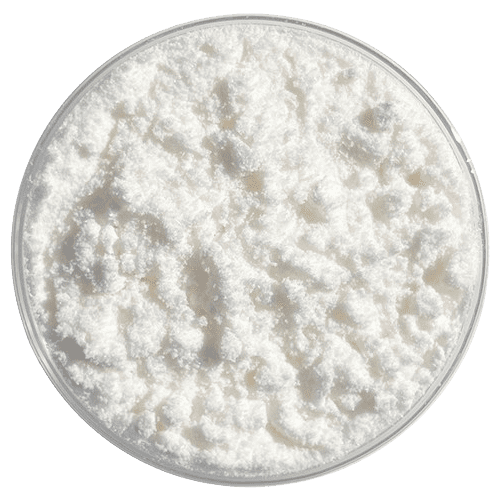
CBD isolate is hemp-derived cannabidiol refined to 99% or higher purity, with all other plant compounds removed. White to off-white fine powder, flavorless, odorless, and non-detect THC across all fractions.
What purity should bulk CBD isolate be?
99.0% or higher CBD by dry weight on HPLC. Standard grade: 99.0 to 99.5%. Premium grade: 99.5 to 99.9%+. Any lot below 99% does not meet commercial isolate specifications.
Does CBD isolate contain THC?
No. A properly refined CBD isolate contains non-detect THC across all fractions — delta-9, delta-8, and THCA. Always confirm non-detect status for all three fractions on the current-lot COA, not just delta-9 alone.
What is the difference between CBD isolate and full-spectrum CBD?
CBD isolate contains only cannabidiol at 99%+ purity. Full-spectrum distillate contains the complete plant cannabinoid profile — CBD, CBG, CBN, terpenes, and THC at or below 0.3%. For zero-detect THC applications, isolate is the appropriate choice.
What is the difference between CBD isolate and broad-spectrum CBD?
Broad-spectrum retains minor cannabinoids alongside CBD but removes THC. Isolate removes all compounds except CBD. Isolate is the right choice when minor cannabinoid complexity is not needed or when maximum formulation control and flavor neutrality are required.
How is CBD isolate used in product manufacturing?
Tinctures (dissolved in carrier oil at a calculated mg/mL ratio), gummies (added to warm gummy mass), capsules and softgels (combined with carrier oil for fill), topicals (dispersed in anhydrous bases), and as the starting material for nano-emulsified water-soluble CBD production.
What is the minimum order quantity for bulk CBD isolate from BCD?
MOQs start at 100g to 1kg depending on the product. Most orders ship within a few days; large orders may take up to 2 weeks. Contact BCD’s sales team to request a sample and current-lot COA data.
What should a CBD isolate COA include?
HPLC cannabinoid panel with CBD purity and non-detect total THC across all fractions; residual solvent panel per USP 467; heavy metals (lead, arsenic, cadmium, mercury); and microbial contamination. Lot-specific, from an ISO 17025-accredited, DEA-registered third-party laboratory. See How to Read a Hemp COA.
Is CBD isolate legal under federal law?
Yes. Hemp-derived CBD isolate is federally legal when sourced from Farm Bill-compliant hemp. Under Section 781 of P.L. 119-37 (effective November 12, 2026), cannabidiol remains within the federal hemp definition. BCD ships with Farm Bill compliance documentation on every order.
How do I calculate CBD isolate potency in a finished tincture?
Multiply grams of isolate by the purity decimal (e.g., 0.995 for 99.5%) by 1,000 to get milligrams of CBD. Divide by total mL of finished tincture. Example: 5g at 99.5% = 4,975 mg CBD; in 500 mL = 9.95 mg/mL.
Related Reading
- Full Spectrum vs. Broad Spectrum vs. CBD Isolate: The Definitive B2B Comparison
- How to Read a Hemp COA: A Step-by-Step Guide for B2B Buyers
- Browse wholesale CBD isolate at BCD
John Piccone
Founder, Bulk CBD Distributors | johnpiccone.com
John Piccone has been active in hemp and CBD since the first year of Farm Bill legalization. Before founding Bulk CBD Distributors in 2021, he helped build two of the early industry’s most significant companies — including a major hemp farming operation that was among the first to grow legally at scale in Puerto Rico and Barcelona, Spain — and contributed to generating a high eight-figure revenue year before those businesses exited the market. BCD has grown into one of the most respected wholesale cannabinoid operations in the US hemp industry, built deliberately small, tactically efficient, and deeply connected across the supply chain. Learn more about BCD.