Bulk CBD flower is hemp cultivar flower harvested at cannabinoid maturity, dried, and cured for use as a retail product, a smokable ingredient, or a downstream extraction feedstock. For B2B buyers (retailers, distributors, brands, and some extraction operations), it is a category that requires evaluation on multiple dimensions simultaneously: potency, terpene profile, compliance, physical presentation, and lot consistency. This guide walks through how to check each one before you commit to a lot. For current strains and lots, see bulk CBD flower.
| Topic | What to know |
|---|---|
| Potency source | Each lot's COA. CBD and THC content vary by cultivar, harvest timing and growing conditions. |
| Forms or grades | Top-shelf (AAA), mid-grade (AA), and trim or small buds |
| Typical order size | Sold by the pound, with larger volumes depending on cultivar and lot inventory |
| THC check | Total THC = Delta-9 THC + (THCA x 0.877), at or below 0.3% by dry weight |
How CBD Flower Grades Work
CBD flower grading is not standardized across the industry the way grain or dairy commodity grades are, but practical tiers have emerged that most wholesale suppliers and buyers recognize. Understanding what each grade means, and what it does not tell you, is the starting point for making a sound bulk flower purchase.
Top-shelf or AAA grade: The highest visual grade, characterized by dense bud structure, full trichome development, consistent color, minimal stem and leaf material, and intact flower architecture. This grade commands a premium and is appropriate for retail display formats where appearance drives purchase decisions: jars, display cases, and premium packaging SKUs.
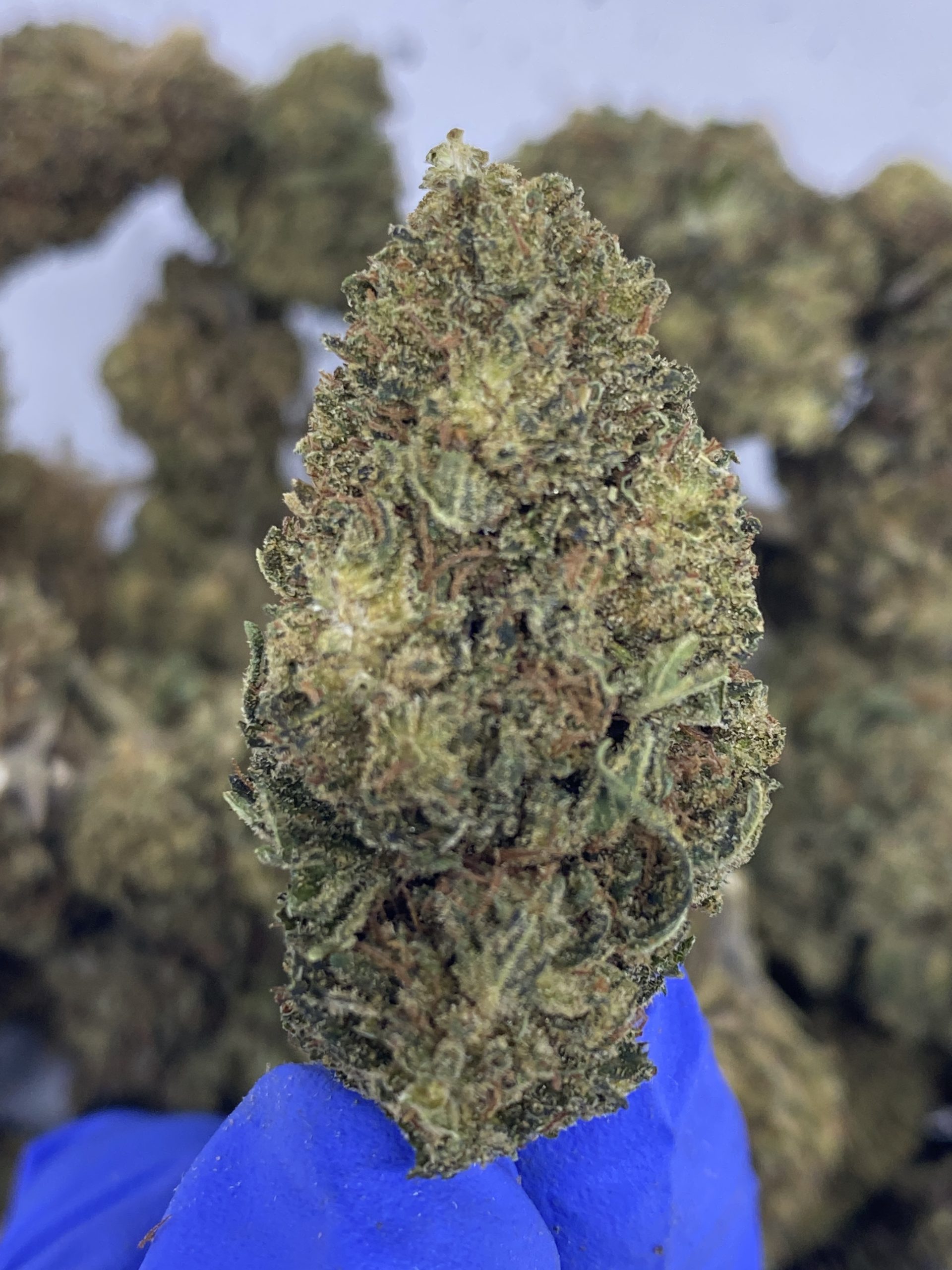
Mid-grade or AA: Solid analytical performance with some variation in bud size, density, or visual consistency. Appropriate for pre-rolls, retail bags, and products where appearance is a secondary consideration. Mid-grade flower from a quality source often delivers CBD per dollar value that exceeds top-shelf at a lower price point.
Trim and small buds: The smaller material resulting from trimming and processing top-shelf lots, sometimes called "smalls," "B buds," or "trim." Small buds carry cannabinoid content similar to the parent lot, while trim usually tests lower but in a form that does not present well as a standalone retail flower product. It is commonly used as pre-roll filler, extraction feedstock, or an ingredient in infused products where visual presentation is not relevant.
Grade terminology varies by supplier. Always request the COA alongside any grade claim: grade describes appearance; the COA describes chemistry. Ask for the full-panel COA before you confirm any wholesale flower order.
| Grade | What it looks like | Common uses | Potency check |
|---|---|---|---|
| Top-shelf (AAA) | Dense buds, full trichome development, consistent color, minimal stem and leaf | Jars, display cases, premium retail SKUs | Lot COA |
| Mid-grade (AA) | Some variation in bud size, density or visual consistency | Pre-rolls, retail bags | Lot COA |
| Small buds | Smaller buds left from trimming and processing top-shelf lots | Pre-roll filler, infused products | Similar to the parent lot; confirm on the COA |
| Trim | Leaf material from trimming that does not present as retail flower | Pre-roll filler, extraction feedstock, infused products | Usually lower than the parent lot; confirm on the COA |
Potency Ranges and What to Expect
CBD content in compliant hemp flower typically ranges from 10% to 22% by dry weight in commercially available cultivars, with most quality wholesale lots falling between 14% and 20%. Total THC at or below 0.3% by dry weight is the federal compliance threshold under Section 781 of P.L. 119-37. The relationship between CBD content and THC content in hemp flower is not fixed (it varies by cultivar genetics and harvest timing), so total THC must be confirmed independently from CBD content on every lot.
One calibration point for buyers new to wholesale CBD flower: analytical performance and visual grade do not reliably correlate. A visually exceptional lot can test at 12% CBD. A modestly presented lot can test at 19%. The potency panel on the COA is the authoritative source, not the appearance of the material in the sample bag. Buyers adding a minor cannabinoid option can compare these ranges with wholesale CBG flower, which is graded and tested the same way.
Terpene Profile: The Second Essential Document
The terpene profile is often overlooked in bulk CBD flower sourcing decisions and should not be. Terpenes are the volatile aromatic compounds that give hemp flower its characteristic smell, flavor, and to some degree its consumer experience. For retail brands and distributors building a product identity around a specific strain profile, the terpene panel from a lot-specific COA is as important as the cannabinoid panel.
Common terpenes in CBD hemp flower include myrcene, caryophyllene, limonene, pinene, and linalool. Total terpene content in quality flower typically falls between 1% and 3% by weight. A lot with strong CBD potency but a weak or inconsistent terpene profile will deliver a different end-product experience than one with comparable CBD and a developed terpene character. When evaluating competing wholesale lots, request the terpene panel for each and compare both documents (potency and terpenes together) before making a volume commitment.
Moisture Content, Curing Standards, and Shelf Life
Moisture content is the most important physical parameter for CBD flower quality and shelf stability. Properly dried and cured hemp flower holds moisture between 8% and 12% by weight. Below 8%, the flower is over-dried: terpenes have volatilized, the texture is brittle, and the consumer experience is degraded. Above 14%, the flower is susceptible to mold development during storage and transit, and the weight includes water rather than plant material.
| Moisture by weight | Condition | What it means for the buyer |
|---|---|---|
| Below 8% | Over-dried | Terpenes have volatilized and the texture is brittle |
| 8% to 12% | Properly dried and cured | Target range; most quality lots arrive at 9% to 11% when packed with humidity control |
| Above 14% | Too wet | Mold risk in storage and transit, and part of the weight you pay for is water |
Well-cured CBD flower stored in sealed, humidity-controlled packaging maintains quality for 12 to 18 months from the cure date. The enemy of stored flower is oxygen and humidity fluctuation. Ask your supplier about storage conditions between harvest finishing and shipment, and confirm that the lot was not re-dried or treated post-cure to correct a moisture problem before packaging.
Section 781 Compliance for Wholesale CBD Flower
CBD flower with total THC at or below 0.3% by dry weight qualifies as a federally compliant hemp product under Section 781 of P.L. 119-37. The critical measurement is total THC using the full formula: delta-9 THC plus (THCA x 0.877). Hemp flower naturally carries THCA as a precursor; the multiplied conversion factor accounts for the molecular weight change when THCA converts to delta-9 THC. A COA that reports only delta-9 THC on a flower lot is not providing a complete compliance value.
For B2B buyers distributing CBD flower into retail markets, state-level compliance requirements vary and may be more restrictive than the federal threshold, so confirm the rules for each destination before you ship or resell. For a full breakdown of what Section 781 means for hemp buyers and sellers, see our 2026 hemp law guide.
Packaging and Storage for Bulk CBD Flower
Bulk CBD flower is commonly shipped in vacuum-sealed bags with nitrogen flush for lots up to approximately 1 pound, moving to sealed mylar bags or sealed containers with humidity packs for larger volume orders. The nitrogen flush prevents oxidation during transit; the humidity control maintains the 8% to 12% moisture window through delivery.
For long-term storage, keep flower in a sealed container away from light, heat, and humidity fluctuation. Storage around 18 degrees Celsius with relative humidity of about 45 to 55% is commonly recommended. Properly stored flower does not require refrigeration for the first 12 months, but a cool environment extends the window before terpene degradation becomes noticeable.
From the Field
"One of the consistent mismatches we see in CBD flower purchasing is the assumption that visual quality and analytical quality track together. They do not. We have handled flower that looks exceptional (tight structure, dense trichome coverage, strong color) that tests at 12% CBD. We have also worked with flower that a casual observer would grade as modest that tests at 19% CBD. Visual grading has its place in describing what a retail customer will see in the bag. But for a B2B buyer making a sourcing decision based on value per gram of CBD, visual grading alone is the wrong primary tool. The two documents that actually answer the sourcing question are the full-panel COA (potency panel, not just a cannabinoid screen) and the terpene profile from the same lot. Together they tell you what the flower actually contains and whether the value per gram of CBD justifies the ask price for that specific lot."
John Piccone, Founder, Bulk CBD Distributors
What to Look for When Evaluating a Wholesale CBD Flower Supplier
The evaluation checklist for a wholesale CBD flower supplier covers four areas:
Documentation: Full-panel COA from a third-party, DEA-registered laboratory. A representative COA to screen the product, and the batch COA for your lot with the order. Terpene panel available on request for the specific lot. Total THC using the delta-9 plus THCA x 0.877 formula.
Physical quality markers:
- Moisture in the 8% to 12% range.
- Nitrogen-flushed or properly sealed packaging.
- No signs of mold, mildew, or unusual discoloration.
- Finishing completion confirmed before shipment.
Supply consistency: Can the supplier provide the same cultivar from the same source lot for a repeat order? Strain-to-strain variation is acceptable; lot-to-lot variation within a named strain order should be disclosed. Ask about lot availability and remaining inventory volume before any purchase commitment so you can plan your production timeline accurately.
Sourcing transparency: USA-grown hemp under USDA-compliant practices. No specific farm names or origin states are required from a buyer's perspective, but the supplier should be able to confirm domestic sourcing and confirm that the source grow operates under the applicable state hemp program.
Frequently Asked Questions
What is bulk CBD flower?
Bulk CBD flower is dried and finished hemp flower purchased in wholesale quantities by retailers, distributors, brands, and processors. It contains CBD as the primary cannabinoid with total THC at or below 0.3% by dry weight, qualifying it as federally compliant hemp under Section 781 of P.L. 119-37.
What CBD percentage is typical in wholesale CBD flower?
Wholesale CBD flower that meets the 0.3% total THC limit, including THCA, typically tests up to about 6% to 8% total CBD by dry weight; higher CBD figures usually come with total THC above the limit. The potency varies by cultivar, harvest timing, and growing conditions. Always verify the specific lot percentage on the COA rather than relying on a cultivar's general reputation or the supplier's advertised specification range.
What grades of CBD flower are available in bulk?
The practical bulk CBD flower grades are top-shelf (AAA, visually exceptional, premium retail presentation), mid-grade (AA, solid analytical performance with some visual variation), and trim or smalls (smaller material from the same lots, suitable for pre-rolls, infused products, and extraction feedstock). Grade terminology is not standardized across the industry; always pair any grade claim with a COA review.
What is the ideal moisture content for wholesale CBD flower?
Properly finished and stored CBD flower holds moisture between 8% and 12% by weight. Below 8% the flower is over-dried and terpene-degraded. Above 14% the flower is susceptible to mold development during storage and transit. Most quality wholesale lots arrive in the 9% to 11% range when properly packed with humidity control.
How is total THC calculated for CBD flower compliance?
Total THC is delta-9 THC plus THCA multiplied by 0.877. Hemp flower naturally carries THCA; the 0.877 conversion factor accounts for molecular weight change when THCA converts to delta-9 THC. A COA reporting only delta-9 THC does not provide a complete total THC value for compliance purposes under Section 781 of P.L. 119-37.
What is the MOQ for wholesale CBD flower at BCD?
MOQs for bulk CBD flower at BCD start at 1 lb, and that first pound works as your sample order. Larger volumes depend on cultivar and lot inventory.
How long does wholesale CBD flower stay fresh?
Properly finished and sealed CBD flower maintains quality for 12 to 18 months from the conditioning date when stored in sealed, humidity-controlled conditions between 15 and 21 degrees Celsius and 55% to 65% relative humidity. Terpene degradation is the primary quality change over time; cannabinoid potency is relatively stable under proper storage conditions.
What documentation should a wholesale CBD flower supplier provide?
A minimum documentation set for bulk CBD flower includes: a lot-specific COA from a third-party, DEA-registered laboratory covering cannabinoid potency (with total THC formula), residual pesticides, heavy metals, microbials, and residual solvents if applicable. A terpene profile from the same lot is also standard practice for quality wholesale flower suppliers.
Can CBD flower be used as an extraction feedstock?
Yes. Trim and smalls grades of CBD flower are commonly used as extraction feedstock for CBD crude oil production, particularly in smaller extraction operations where whole-biomass feedstock economics are less favorable. The extraction yield and profile from flower feedstock will reflect the cannabinoid and terpene content of the source lot.
Is wholesale CBD flower compliant after Section 781 takes effect?
Yes. CBD flower with total THC at or below 0.3% by dry weight is federally compliant under Section 781 of P.L. 119-37. Section 781 counts total THC, including THCA, so CBD flower has to meet the limit on that basis. State-level requirements may vary, so confirm the rules for each destination.
Compare current CBD flower lots and COAs
Current cultivars and their lot COAs are listed in the bulk CBD flower collection, for example Royal OG CBD flower. If you would like help comparing lots on potency, terpenes and moisture, send us the details and we will walk through them with you.