CBD distillate is a concentrated hemp extract containing 45 to 95% cannabidiol depending on grade (broad spectrum 80 to 95%, full spectrum 75 to 85%+, crystal resistant 45 to 60%+), produced through extraction, winterization, decarboxylation, and distillation of hemp biomass. For B2B buyers, CBD distillate is the most versatile bulk hemp ingredient, available in three distinct types (full-spectrum, broad-spectrum, and crystal resistant) each suited to different product categories, THC tolerance requirements, and formulation behaviors. This guide covers what CBD distillate is, how the three types differ, what potency specs and COA parameters to require, and how to source it in bulk. Current grades and representative COAs are listed on the CBD distillate page.
What Is CBD Distillate?
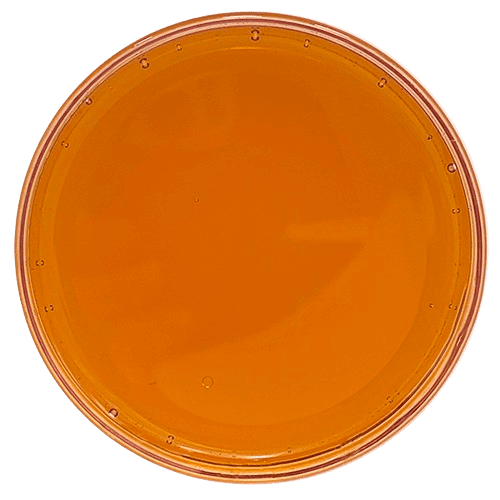
CBD distillate is hemp extract refined through distillation to concentrate cannabidiol to 60% or higher purity, removing plant waxes, chlorophyll, most residual solvents, and the bulk of non-cannabinoid plant material. The output is a viscous, amber-to-golden oil (liquid when warm, thicker at room temperature) with characteristic hemp flavor and odor from retained terpene and minor cannabinoid content.
CBD distillate sits between CBD crude oil (unrefined, 50 to 70% CBD) and CBD isolate (fully refined, 99%+ CBD, all other compounds removed). For most B2B product formulation applications, distillate is the practical middle ground: high enough potency for precise dosing, retaining enough of the plant's cannabinoid and terpene profile to support multi-cannabinoid product positioning.
CBD Distillate vs. CBD Isolate vs. CBD Crude Oil
| Factor | CBD Distillate | CBD Isolate | CBD Crude Oil |
|---|---|---|---|
| CBD purity | 45 to 95% by type | 99%+ | 50 to 70% |
| Form | Viscous amber oil | White crystalline powder | Dark viscous oil |
| Minor cannabinoids | Present | None | Present + waxes |
| Flavor / odor | Hemp-forward | Completely neutral | Strong, earthy |
| Processing after purchase | Minimal: ready for formulation | None: dissolve in carrier | Further refinement needed |
| Best for | Tinctures, topicals, edibles, vape | Precision dosing, flavor-neutral | Extraction labs, further processing |
Three Types: Full-Spectrum, Broad-Spectrum, and CRD
Full-Spectrum CBD Distillate
Full-spectrum CBD distillate retains a broad range of the hemp plant's cannabinoids, including its natural THC. The Standard version typically tests above 0.3% Delta-9 THC and is in-process material; the Compliant version is remediated to 0.3% Delta-9 THC or less. CBD is dominant at 75 to 85%+, accompanied by CBG, CBN, and CBC at trace levels. Under Section 781 of P.L. 119-37, total THC (THCA counts) is the measure from December 11, 2026, so check total THC, not just Delta-9 THC, on every lot. Appropriate for whole-plant product positioning where terpene content contributes to the product's sensory profile.
Broad-Spectrum CBD Distillate

Broad-spectrum CBD distillate removes THC through chromatographic remediation while retaining CBD and some minor cannabinoids; native terpenes are largely reduced. Result: 80 to 95% CBD, with Delta-9 THC at 0.3% or less on Standard lots (some lots non-detect) and non-detect THC on the Non-Detect THC option. The most widely sourced CBD distillate format in B2B wholesale.
Crystal Resistant Distillate (CRD)
CRD is distillate formulated (for example, with added terpenes) to resist CBD crystallization at room temperature. Most commonly used in vape cartridges, gummy production, and tinctures where consistently flowable oil is required. When you evaluate CRD, ask which terpenes were added and at what level, and check potency on the current-lot COA.
From the Field
"Distillate is one of the categories where documentation gaps have caused the most problems for buyers over the years, and the risk has shifted as the market evolved. In the early days, the issue was suppliers understating total THC by reporting only Delta-9 and ignoring the full formula. That created compliance exposure for buyers who thought they were sourcing a compliant product. As the market matured and standards improved, the risk moved toward potency consistency: lots that assay at 72% CBD on one order and 68% on the next, creating dosing recalculations mid-production. The COA standard we require at BCD (ISO 17025-accredited, DEA-registered third-party, full formula total THC, lot-specific) exists because we have seen what each of these gaps costs a buyer. It is not paperwork. It is protection."
John Piccone, Founder, Bulk CBD Distributors
Potency Specs and COA Requirements
Cannabinoid Panel
- CBD purity: full-spectrum 75 to 85%+; broad-spectrum 80 to 95%; crystal resistant distillate is formulated at 45 to 60%+. Other material below 60% should be evaluated as crude oil grade.
- Total THC: calculated as Delta-9 + (THCA x 0.877), plus Delta-8 and other THC isomers, which Section 781 counts. Full-spectrum: Standard typically above 0.3% Delta-9 THC; Compliant 0.3% or less. Broad-spectrum: Standard 0.3% or less, some lots non-detect; the Non-Detect THC option is non-detect on all fractions. A COA showing only Delta-9 THC is not sufficient.
- Minor cannabinoids: CBG, CBN, CBC should be present in full-spectrum and broad-spectrum. Complete absence may indicate over-processing.
Residual Solvents, Heavy Metals, Pesticides, and Microbials
Per USP 467: Class 2 solvents at or below each solvent's listed limit (for example, hexane 290 ppm); Class 3 at or below 5,000 ppm. Full contamination panel required: heavy metals (lead, arsenic, cadmium, mercury), pesticides (50-compound minimum), and microbials. See How to Read a Hemp COA for the complete verification guide.
How to Evaluate a CBD Distillate Supplier
- Specify the type before requesting pricing: full-spectrum, broad-spectrum, and CRD are priced differently.
- Request a current-lot COA before committing; distillate potency varies by lot.
- Verify physical form at your processing temperature; distillate may be semi-solid and requires warming to pour.
- Confirm packaging format: 1 kg sealed containers for standard volumes; drums for larger orders.
- Confirm lot availability at time of order, not general availability.
Bulk distillate is usually sold from 100g to 1kg upward, and potency varies by lot, so compare each current-lot COA with your formulation spec before you order.
What This Means for Your Business
Selecting the right CBD distillate type is a formulation decision as much as a procurement decision. Full-spectrum suits whole-plant product positioning where terpene content matters and THC compliance levels are acceptable. Broad-spectrum suits the largest share of B2B formulation use cases. CRD suits applications where flow and customizable terpene profiles are priorities. In all cases, the COA must be current-lot, full-panel, from an ISO 17025-accredited, DEA-registered third-party laboratory.
Compare Current CBD Distillate Specs and COAs
Current types, sizes and representative COAs for full-spectrum CBD distillate and broad-spectrum CBD distillate are on their product pages, and every grade is listed under CBD distillate. Minimums run 100g to 1kg depending on the product, and most orders ship within a few days.
Frequently Asked Questions
What is CBD distillate?
CBD distillate is a concentrated hemp extract containing 45 to 95% cannabidiol, depending on grade, produced through extraction, winterization, decarboxylation, and short-path or wiped-film distillation. Available in full-spectrum (Standard and Compliant), broad-spectrum (Standard and Non-Detect THC), and crystal resistant (CRD) types.
What is the difference between full-spectrum and broad-spectrum CBD distillate?
Full-spectrum keeps the plant's natural THC (Standard typically above 0.3% Delta-9 THC; Compliant 0.3% or less). Broad-spectrum reduces THC through additional remediation, to 0.3% or less on Standard lots or to non-detect on the Non-Detect THC option, while retaining CBD and minor cannabinoids. The choice depends on whether your product or market requires zero-THC positioning.
What is crystal resistant distillate (CRD)?
CRD is CBD distillate formulated with added terpenes to prevent crystallization at room temperature. Most commonly used in vape cartridges, gummy production, and tinctures requiring consistently flowable oil.
What potency should bulk CBD distillate be?
Full-spectrum: 75 to 85%+ CBD. Broad-spectrum: 80 to 95% CBD. Material below 60% is approaching crude oil specifications, unless it is a crystal resistant formulation. Always verify the specific lot's potency on the current-lot COA.
What should a CBD distillate COA include?
Full cannabinoid panel with total THC as Delta-9 + Delta-8 + (THCA x 0.877); residual solvents per USP 467; heavy metals; pesticides (50-compound minimum); microbials. Lot-specific, from an ISO 17025-accredited, DEA-registered third-party laboratory.
Is CBD distillate legal in 2026?
Yes, with conditions. Hemp-derived CBD distillate stays within the federal hemp definition under Section 781 of P.L. 119-37, but from December 11, 2026 total THC (THCA counts) applies and finished products are capped at 0.4 mg total THC per container. Check total THC on every lot COA and in each finished product.
What is BCD's minimum order for CBD distillate?
Minimums run 100g to 1kg depending on the product, and most orders ship within a few days.
How does CBD distillate pricing compare to CBD isolate?
On a per-mg-of-CBD basis, CBD isolate is typically less expensive than broad-spectrum distillate. Broad-spectrum carries a premium for the multi-cannabinoid profile and THC remediation step. Full-spectrum is typically the lowest price per kilogram due to less post-distillation processing.
Can CBD distillate be used in gummies?
Yes. Broad-spectrum CBD distillate is widely used in gummy manufacturing. CRD is often preferred because its consistent flowability simplifies dosing at production temperatures. For flavor-neutral gummies, CBD isolate is the alternative.